Writer@Dr.Ram BPThIntroduction
10 Best Exercise for Back Pain Back pain can be one of the most limiting conditions in daily life. People who undergo spinal decompression therapy often experience relief from pressure on the nerves, reduced pain, and improved posture. However, recovery does not stop after the therapy session ends. To maintain results, strengthen supporting muscles, and prevent recurring discomfort, performing specific exercise for back pain after a spinal decompression machine is crucial.
In this guide, we will cover the 10 Best Exercise for Back Pain that can help you safely regain mobility and strength. Each move is designed to reduce stiffness, build stability, and improve long-term spine health. In addition, we will discuss the benefits of exercising after spinal decompression, safety tips, and frequently asked questions.
Why Exercise After Spinal Decompression Machine Therapy Matters
Spinal decompression helps by relieving pressure on compressed discs and nerves. However, if muscles around the spine remain weak, the results may not last. Therefore, incorporating the right exercises ensures that your spine stays aligned and supported. Transitioning from passive treatment to active recovery builds resilience and lowers the risk of recurring back pain.
1. Pelvic Tilts – Gentle Core Activation
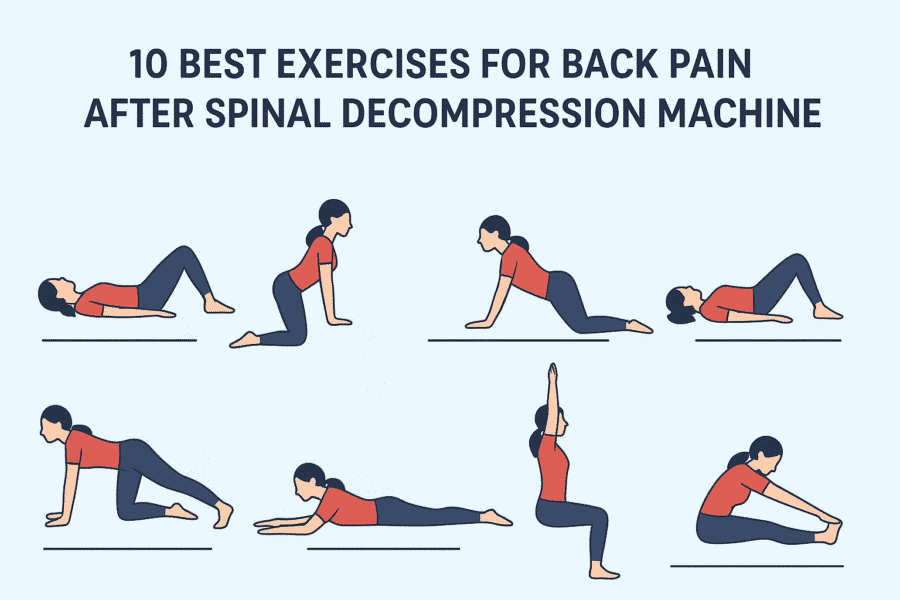
Pelvic tilts are among the best exercises for back pain after spinal decompression machines because they activate deep core muscles without straining the spine. Lie on your back with knees bent and feet flat. Slowly flatten your lower back against the floor by tightening your abdominal muscles. Hold for a few seconds and release. This exercise strengthens the lower back and enhances stability.
2. Cat-Cow Stretch – Improving Flexibility
The cat-cow stretch is a perfect spine mobility movement. Begin on your hands and knees, then arch your back upward (cat) and slowly dip it downward while lifting your head (cow). This sequence improves flexibility, reduces stiffness, and promotes circulation. As a result, it helps maintain the benefits of decompression.
3. Child’s Pose Stretch – Relaxing the Spine
A child’s pose is a gentle yoga posture that elongates the spine and relieves tension. Kneel with your hips over your heels, stretch your arms forward, and rest your forehead on the ground. This calming position encourages relaxation and helps release tightness in the lower back after spinal decompression.
4. Glute Bridges – Strengthening the Posterior Chain
Strengthening glutes and hamstrings plays a major role in stabilizing the lower back. To perform a bridge, lie flat on your back, bend your knees, and lift your hips while squeezing your glutes. Slowly lower back down. Glute bridges enhance spinal support and reduce pressure on lumbar discs.
5. Bird Dog Exercise – Enhancing Balance and Core Control
The bird dog exercise is highly effective in preventing instability. Start on your hands and knees, extend your right arm and left leg, hold, then switch sides. This controlled movement engages deep stabilizers and improves coordination. For anyone searching for the most functional exercise for back pain after spinal decompression machines, bird dogs are essential.
6. Seated Forward Fold Stretch – Lengthening Tight Muscles
Tight hamstrings can worsen lower back stress. Sit with your legs extended, then gently reach forward toward your toes. Avoid forcing the stretch; keep your spine long and relaxed. Over time, this improves flexibility and reduces spinal strain.
7. Wall Angels – Correcting Posture
Wall angels are excellent for upper and mid-back strengthening. Stand with your back against a wall, arms bent at 90 degrees. Slowly raise your arms upward while keeping contact with the wall. This exercise opens the chest, strengthens the shoulders, and improves spinal alignment.
8. Side-Lying Leg Lifts – Supporting Hip Stability
Strong hip muscles protect the spine by absorbing stress during movement. Lie on one side, stack your legs, and slowly lift the top leg upward. Lower it down with control. This move targets the outer hips and prevents muscle imbalances that often contribute to back discomfort.
9. Knee-to-Chest Stretch – Releasing Lower Back Tension
The knee-to-chest stretch is a gentle way to relieve lumbar tightness. Lie flat, bend one knee, and pull it toward your chest while keeping the other leg extended. Hold for a few seconds before switching sides. This simple move helps relax the spine after decompression therapy.
10. Core Stability Plank – Building Endurance Safely
A strong core ensures long-lasting relief from back pain. Perform a modified plank by resting on your forearms and knees, then progress to a full plank as strength improves. Keep your spine neutral and avoid sagging. Even short holds can significantly improve spinal health.
Benefits of Doing Exercise After Spinal Decompression Machine 10 Best Exercise for Back Pain
- Maintains spinal alignment and prevents re-compression.
- Improves flexibility and reduces stiffness.
- Strengthens muscles that support the spine.
- Enhances posture and reduces strain during daily activities.
- Promotes circulation for faster healing.
By combining therapy with active movement, you create a sustainable recovery plan.
Safety Tips Before Starting Any Exercise
- Always consult your doctor or physical therapist.
- Start with gentle stretches before progressing to strengthening moves.
- Avoid jerky or high-impact exercises initially.
- Listen to your body and stop if pain increases.
- Perform exercises on a soft surface to protect your spine.
FAQs on Exercise for Back Pain After Spinal Decompression Machine
Q1. How soon can I start exercising after spinal decompression therapy?
Most patients can begin gentle stretching within 24–48 hours. However, consult your healthcare provider before starting.
Q2. Can exercise worsen back pain after decompression therapy?
If done correctly, exercise supports recovery. Avoid intense or heavy lifting moves until your body is ready.
Q3. Which exercise is safest for beginners?
Pelvic tilts, child’s pose, and knee-to-chest stretches are safe starting points.
Q4. How often should I exercise for back pain relief?
Aim for 15–20 minutes, at least 4–5 days per week, to build consistency without overloading the spine.
Q5. Are yoga and Pilates good after spinal decompression?
Yes, as long as movements are gentle, controlled, and approved by your doctor.
Conclusion
10 Best Exercise for Back Pain Recovering from spinal decompression therapy requires more than rest. To make results last, combining therapy with the right exercise for back pain after a spinal decompression machine is the key. Gentle stretches such as child’s pose, strengthening moves like glute bridges, and stability exercises such as bird dog create a balanced recovery plan. By practicing consistently, you can enjoy reduced pain, improved mobility, and a stronger spine for the future.