Author@Dr.Ram BPTh Introduction
Neck pain is one of the most common problems people face today due to poor posture, long working hours, or underlying spinal conditions. For many, spinal decompression machine therapy offers relief by gently stretching the spine and reducing pressure on discs and nerves. However, lasting recovery depends not only on decompression therapy but also on performing the right exercises. In fact, gentle movements and strengthening routines can make decompression results more effective. In this blog post, we will discuss the 10 best exercises for neck pain after spinal decompression machine therapy, including their benefits, step-by-step instructions, and safety tips.
- How the Brain Links Sensory Input, Movement, and Thinking
- Why Exercise Is Essential for Restoring Fitness After GLP-1-Based Weight Loss
- Physiotherapy for Back Pain: Best Exercises & Tips for Long-Term Relief
- Why Is My Child Not Sitting/Standing/Walking ? A Complete Guide for Parents
- How Pediatric Physiotherapy Helps Delayed Milestones
1. Neck Pain Relief Exercises After Spinal Decompression
The first group of exercises focuses on gentle neck stretches that relax tight muscles and improve blood flow. After spinal decompression, it is common to feel stiffness. Simple neck stretches can prevent this stiffness from turning into chronic pain. To perform a basic stretch, sit upright and slowly tilt your head to one side, holding the stretch for 15–20 seconds. Then repeat on the other side. These movements are safe and effective when done daily.
2. Cervical Range of Motion Exercises for Neck Pain
Cervical range of motion exercises are designed to restore mobility after spinal decompression therapy. Since spinal decompression reduces nerve compression, maintaining flexibility is essential. Slowly turn your head left and right as if looking over your shoulders. Next, gently nod forward and backward. Finally, tilt your head toward each shoulder. Performing these movements twice daily helps keep the neck mobile without adding stress to healing tissues.
3. Postural Correction Exercises for Neck Pain Recovery
Poor posture often contributes to neck pain. After spinal decompression machine sessions, postural correction exercises can train your body to stay aligned. One simple exercise is the chin tuck. Sit with your back straight and pull your chin slightly back, as if making a double chin. Hold for 5–10 seconds and release. This exercise strengthens deep neck flexors and promotes better spinal alignment.
4. Shoulder Blade Squeeze for Neck Strengthening
The shoulder blade squeeze is excellent for improving stability around the neck and shoulders. Sit or stand upright, then squeeze your shoulder blades together without lifting your shoulders. Hold for 5 seconds and repeat 10 times. Since spinal decompression relieves pressure on the spine, this exercise complements it by strengthening muscles that support the neck naturally.
5. Isometric Neck Exercises for Spinal Decompression Recovery
Isometric exercises involve contracting muscles without actual movement. After spinal decompression, these are particularly helpful because they build strength without stressing healing tissues. Place your palm against your forehead and gently push your head forward into your hand without moving your neck. Hold for 5 seconds. Repeat with your hand placed at the back and then on each side of the head. This builds balanced neck strength.
6. Neck Pain Stretching Exercises After Therapy
Stretching after spinal decompression improves circulation and prevents tightness. One effective stretch is the levator scapulae stretch. To perform it, sit upright, turn your head slightly to one side, then tilt it downward as if looking into your armpit. Use your hand to apply light pressure. This stretch targets muscles often responsible for neck pain and can be repeated on both sides.
7. Strengthening Exercises for Neck Pain Rehabilitation
Strengthening exercises build long-term resilience. After spinal decompression, your neck muscles may feel weak. Light resistance band exercises can help. For example, attach a resistance band to a stable object, hold it in your hands, and perform gentle rowing movements while keeping your neck neutral. This strengthens the upper back and neck-supporting muscles, reducing the risk of recurring pain.
8. Deep Breathing Exercises for Neck Pain Relief
Neck pain is often worsened by stress and shallow breathing. After spinal decompression therapy, incorporating deep breathing exercises can calm the nervous system and relax tight muscles. Sit comfortably, place one hand on your chest and one on your abdomen, and take slow, deep breaths. This not only reduces muscle tension but also enhances oxygen flow to healing tissues.
9. Yoga Exercises for Neck Pain After Spinal Decompression Machine
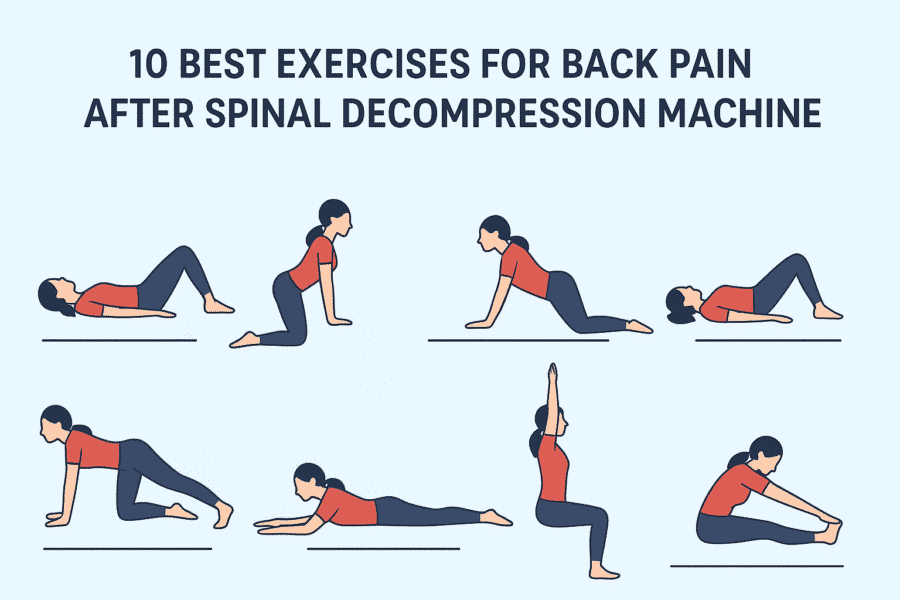
Gentle yoga postures such as Cat-Cow, Child’s Pose, and Seated Neck Stretches are safe for people recovering from spinal decompression. These yoga moves improve flexibility, reduce stiffness, and promote overall spinal health. However, it is important to avoid extreme positions. Always move slowly and focus on controlled breathing during yoga exercises for neck pain.
10. Daily Mobility Exercises for Neck and Upper Back Health
Mobility exercises help integrate the benefits of spinal decompression into daily activities. Shoulder rolls, arm circles, and gentle torso twists are easy to perform at home. These movements ensure that muscles supporting the cervical spine remain active and strong. When combined with the above exercises, they create a complete program for long-term neck pain management.
Safety Tips Before Starting Exercises After Spinal Decompression
Although these exercises are generally safe, always consult your doctor or physical therapist before starting. Avoid jerky movements, do not push through sharp pain, and maintain proper form. Begin with short sessions and increase gradually. Remember that consistency is more important than intensity when it comes to recovery.
Benefits of Neck Exercises After Spinal Decompression
Performing exercises after spinal decompression therapy ensures long-lasting results. These benefits include:
- Reduced stiffness and tension
- Improved posture and spinal alignment
- Stronger neck and upper back muscles
- Lower risk of recurring pain
- Better mobility and flexibility
By combining decompression therapy with the right exercise routine, you can maximize your recovery and prevent future discomfort.
FAQs About Exercises After Spinal Decompression Machine
1. Can I exercise immediately after spinal decompression machine therapy?
Yes, but only gentle stretches and mobility exercises are recommended in the beginning. Avoid heavy workouts unless approved by your doctor.
2. How often should I do neck pain exercises after decompression therapy?
Most people benefit from performing them daily for 10–15 minutes. Consistency is key for long-term relief.
3. Are yoga exercises safe after spinal decompression?
Gentle yoga postures are safe, but avoid deep backbends or extreme stretches. Always focus on controlled breathing.
4. Do I need equipment for these exercises?
Most exercises can be done without equipment. However, resistance bands or yoga mats can enhance the routine.
5. Can exercises replace spinal decompression therapy?
No, exercises cannot replace decompression therapy, but they complement it by strengthening muscles and supporting recovery.
Conclusion
Spinal decompression machine therapy is highly effective for relieving neck pain, but its benefits are even greater when combined with proper exercise. By following the 10 best exercises for neck pain after spinal decompression machine therapy, you can strengthen your muscles, restore flexibility, and enjoy lasting pain relief. Remember to perform these exercises consistently, maintain good posture, and listen to your body. With the right approach, you can regain comfort, mobility, and a healthier spine.