
Introduction
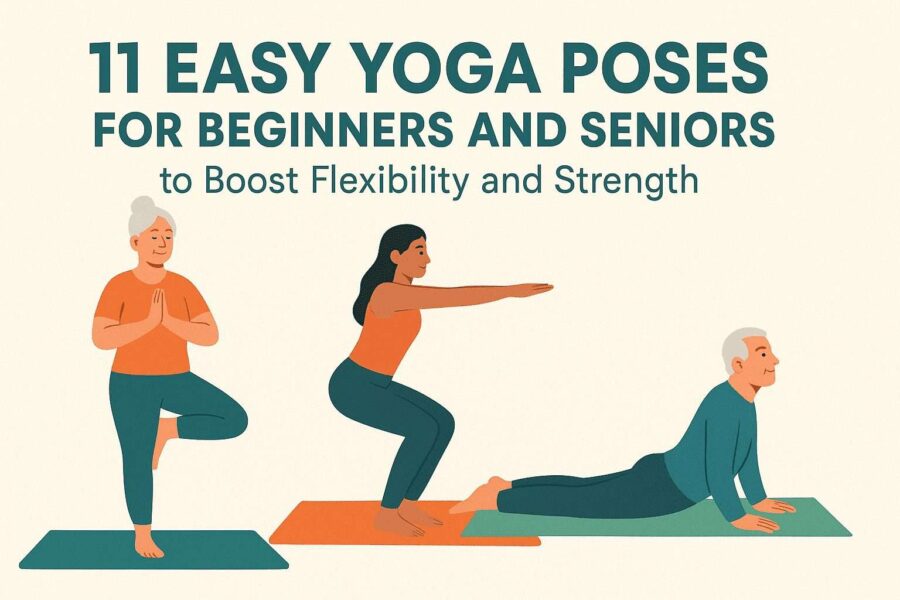
Yoga has been practiced for centuries, and today it is recognized worldwide as one of the best ways to improve both body and mind. For beginners and seniors, yoga provides a safe, low-impact way to build flexibility, balance, and strength without strain. With the right approach, anyone can experience the benefits of yoga regardless of age or fitness level. In this guide, we will explore 11 easy yoga poses for beginners and seniors that help improve flexibility and strength, while also reducing stiffness, supporting posture, and calming the mind.
Why Yoga for Beginners and Seniors?
Yoga is not about achieving the perfect posture. Instead, it focuses on gentle stretches, mindful breathing, and movements that adapt to your body’s needs. Seniors often face challenges such as joint stiffness, muscle weakness, and reduced balance. Beginners may worry about flexibility or endurance. However, yoga offers gradual progress, which makes it an excellent solution for all.
With consistency, yoga:
- Improves flexibility and joint mobility
- Builds muscle strength safely
- Enhances balance and stability
- Reduces stress and improves mental clarity
- Supports healthy aging
11 Easy Yoga Poses for Beginners and Seniors
Here are simple, effective yoga poses you can start practicing today. Remember to listen to your body, breathe deeply, and move at your own pace.
1. Mountain Pose (Tadasana)
How to do it:
- Stand tall with feet hip-width apart.
- Keep shoulders relaxed and arms by your side.
- Engage your core and take deep breaths.
Benefits:
This foundational pose improves posture, strengthens the legs, and creates awareness of body alignment.
2. Chair Pose (Utkatasana)
How to do it:
- Stand with feet together.
- Bend your knees as if sitting in a chair.
- Keep arms lifted forward or overhead.
Benefits:
Builds strength in the thighs, glutes, and core while improving stamina.
3. Cat-Cow Stretch (Marjaryasana-Bitilasana)
How to do it:
- Begin on hands and knees.
- Inhale, arch your back (Cow).
- Exhale, round your back (Cat).
Benefits:
Gently stretches the spine, reduces stiffness, and increases flexibility in the back.
4. Tree Pose (Vrikshasana)
How to do it:
- Stand tall and shift weight onto one leg.
- Place the opposite foot on your calf or thigh (avoid the knee).
- Balance with palms together at the chest.
Benefits:
Enhances balance, strengthens legs, and calms the mind.
5. Warrior II (Virabhadrasana II)
How to do it:
- Stand with legs wide apart.
- Bend one knee while extending arms parallel to the floor.
- Look past your front hand.
Benefits:
Strengthens legs and arms while improving focus and stamina.
6. Seated Forward Bend (Paschimottanasana)
How to do it:
- Sit with legs stretched forward.
- Inhale, raise arms, and exhale as you fold forward gently.
- Keep spine straight and reach as far as comfortable.
Benefits:
Increases flexibility in the hamstrings and spine, and soothes the nervous system.
7. Bridge Pose (Setu Bandhasana)
How to do it:
- Lie on your back with knees bent and feet flat.
- Press feet into the floor and lift hips upward.
- Keep arms alongside the body.
Benefits:
Strengthens glutes, core, and lower back while opening the chest.
8. Child’s Pose (Balasana)
How to do it:
- Kneel and sit back on your heels.
- Stretch arms forward and rest forehead on the mat.
Benefits:
Relieves tension, stretches hips and thighs, and promotes relaxation.
9. Cobra Pose (Bhujangasana)
How to do it:
- Lie face down with palms under shoulders.
- Inhale and gently lift chest upward, keeping elbows close.
Benefits:
Improves spinal flexibility, strengthens back muscles, and opens the chest.
10. Reclined Spinal Twist (Supta Matsyendrasana)
How to do it:
- Lie on your back with arms stretched out.
- Bend one knee and drop it gently to the opposite side.
- Hold and breathe deeply.
Benefits:
Releases tension in the spine, stretches the back, and aids digestion.
11. Corpse Pose (Savasana)
How to do it:
- Lie flat on your back with arms by your side.
- Close eyes and focus on breathing.
Benefits:
Relaxes the body, reduces stress, and promotes overall well-being.
Tips for Safe Practice
- Always warm up before starting yoga.
- Use props like blocks, straps, or chairs for support.
- Breathe steadily and avoid holding your breath.
- Stop immediately if you feel pain.
- Practice regularly but never force your body.
Frequently Asked Questions (Q/A)
Q1: Can seniors practice yoga safely?
Yes, seniors can practice yoga safely if they choose beginner-friendly poses and move gently. Consulting a doctor before starting is recommended, especially if there are medical conditions.
Q2: How often should beginners do yoga?
Beginners can start with 2–3 sessions per week and gradually increase frequency as flexibility and strength improve.
Q3: Do I need special equipment for yoga?
All you need is a yoga mat. Optional props like cushions, blocks, or straps can help with comfort and alignment.
Q4: Can yoga replace exercise?
Yoga complements exercise by building flexibility, balance, and strength. It is excellent for overall health, but combining yoga with light walking or aerobic activity provides complete benefits.
Q5: How long should I hold each pose?
For beginners and seniors, holding each pose for 15–30 seconds is sufficient. Gradually, you can increase duration as your comfort grows.
Conclusion
Yoga is not just a physical workout; it is a holistic practice that nurtures body, mind, and spirit. For beginners and seniors, the 11 easy yoga poses discussed above provide an excellent foundation for building strength, improving flexibility, and supporting overall wellness. By practicing regularly, staying patient, and respecting your body’s limits, you will notice gradual improvements in mobility, balance, and relaxation.
Start today, and let yoga become a lifelong companion in your journey toward better health and inner peace.

