
Writer@healingwithram- How the Brain Links Sensory Input, Movement, and Thinking
- Why Exercise Is Essential for Restoring Fitness After GLP-1-Based Weight Loss
- Physiotherapy for Back Pain: Best Exercises & Tips for Long-Term Relief
- Why Is My Child Not Sitting/Standing/Walking ? A Complete Guide for Parents
- How Pediatric Physiotherapy Helps Delayed Milestones
Understanding Asthma in Newborns
Asthma in newborns is a condition where airways become inflamed, narrow, and produce extra mucus. As a result, breathing becomes difficult. Although asthma is more common in older children, newborns can also show symptoms. Therefore, parents must stay informed and recognize early signs.
Common Symptoms of Asthma in Infants
The symptoms of asthma in newborns can sometimes be mistaken for other respiratory infections. However, there are common indicators:
- Persistent coughing, especially at night
- Wheezing or whistling sounds during breathing
- Shortness of breath or rapid breathing
- Tightness in the chest
- Difficulty feeding due to breathing problems
In newborns, these symptoms can interfere with sleep and feeding, leading to concerns about weight gain.
Keyphrase: Asthma Causes in Newborns
The exact cause of asthma in newborns is still under study. However, some factors increase the risk. These include family history of asthma, premature birth, low birth weight, exposure to smoke, or environmental pollutants. Additionally, allergies and frequent respiratory infections can also play a role.
Keyphrase: Triggers of Asthma in Newborn Babies
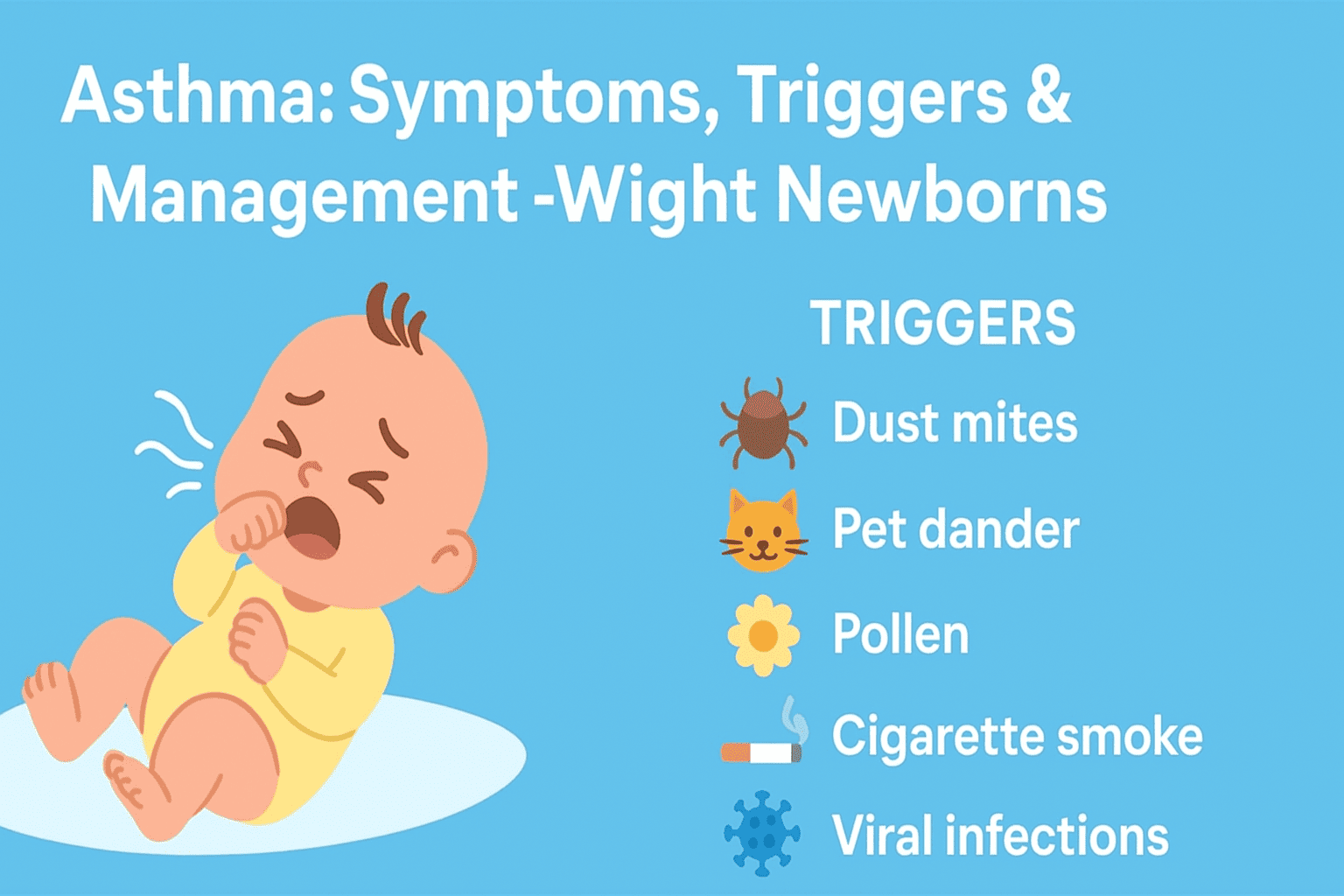
Triggers are conditions or substances that worsen asthma. For newborns, triggers may include:
- Dust mites and pet dander
- Pollen and seasonal changes
- Cigarette smoke exposure
- Cold air or sudden temperature changes
- Viral respiratory infections
Recognizing and reducing triggers can make a huge difference in asthma management.
Keyphrase: Asthma and Weight in Newborns
Asthma can affect the overall health of a newborn, including weight. Babies with frequent breathing problems may struggle during feeding. As a result, they may gain weight slower than expected. In some cases, medication for asthma can also influence appetite and growth. Therefore, monitoring weight alongside asthma symptoms is essential.
Keyphrase: How to Manage Asthma in Newborns
Management involves medical guidance, lifestyle care, and parental support. Steps include:
- Following prescribed medication carefully
- Using nebulizers or inhalers as directed
- Keeping the home environment dust-free
- Maintaining good air quality
- Monitoring baby’s weight and growth regularly
Keyphrase: Preventing Asthma Attacks in Infants
Prevention is always better than cure. Parents can take several steps:
- Avoid exposing newborns to cigarette smoke
- Keep pets away from the baby’s sleeping area
- Wash bedding frequently to reduce dust mites
- Use air purifiers for cleaner breathing space
- Keep vaccinations up to date to reduce infections
Keyphrase: Feeding Difficulties in Newborns with Asthma
Feeding challenges are common. Due to difficulty in breathing, newborns may stop feeding often. Parents should feed smaller amounts more frequently, ensure proper burping, and keep the baby’s head slightly elevated during feeding. This approach helps prevent choking and makes breathing easier.
Keyphrase: Impact of Asthma on Newborn Growth
Asthma can slow down growth if not managed well. Lack of proper oxygen supply, feeding interruptions, and frequent hospital visits can impact growth milestones. However, with early treatment, most newborns grow normally.
Keyphrase: Medical Support for Newborn Asthma
Parents must always seek medical advice if symptoms appear. Pediatricians may recommend bronchodilators, corticosteroids, or inhalers. In severe cases, hospitalization may be required. Never ignore symptoms, as untreated asthma can become dangerous.
Keyphrase: Weight Monitoring in Asthma-affected Newborns
Since weight gain can be slower, pediatricians often monitor newborns closely. Parents may also be asked to keep a record of feeding times, weight, and any breathing difficulties. This data helps doctors decide on treatment plans.
Keyphrase: Lifestyle Tips for Parents of Newborns with Asthma
Parents can support newborns by maintaining a healthy environment. Some practical tips include:
- Regularly cleaning the house
- Avoiding strong perfumes and chemical sprays
- Keeping humidity levels balanced
- Encouraging gentle playtime for better lung development
Keyphrase: Long-term Outlook of Asthma in Newborns
The long-term outlook for newborns with asthma is generally positive with proper care. Many children outgrow severe symptoms as they grow older. Regular check-ups and a healthy lifestyle improve the chances of better health outcomes.
Keyphrase: Emotional Support for Parents
Caring for a newborn with asthma can be stressful. Parents may feel worried about weight gain, breathing issues, and frequent doctor visits. However, emotional support, joining parent groups, and following professional guidance can reduce stress.
FAQs on Asthma: Symptoms, Triggers & Management -Weight Newborns
Q1. Can newborns really have asthma?
Yes, although rare, newborns can show symptoms of asthma. Early detection is important for treatment.
Q2. Does asthma affect weight gain in newborns?
Yes, breathing difficulties can interrupt feeding, which may slow down weight gain.
Q3. What are the most common asthma triggers in newborns?
Dust, smoke, pollen, cold air, and viral infections are the most common triggers.
Q4. How can parents manage asthma at home?
By following medical advice, keeping the environment clean, and monitoring feeding and weight.
Q5. Can newborns outgrow asthma?
Some children may outgrow symptoms, but others may continue with asthma into childhood.
Conclusion
In conclusion, Asthma: Symptoms, Triggers & Management -Weight Newborns is a critical topic for new parents. With proper awareness, early diagnosis, and consistent management, newborns can lead healthy lives. Although asthma may affect feeding and weight, careful monitoring ensures growth continues normally. Parents must remain proactive, consult healthcare professionals, and create a safe environment for their little ones.
All Medical content is based on verified sources such as ICMR, AIIMS, and MoHFW India


