
Overview
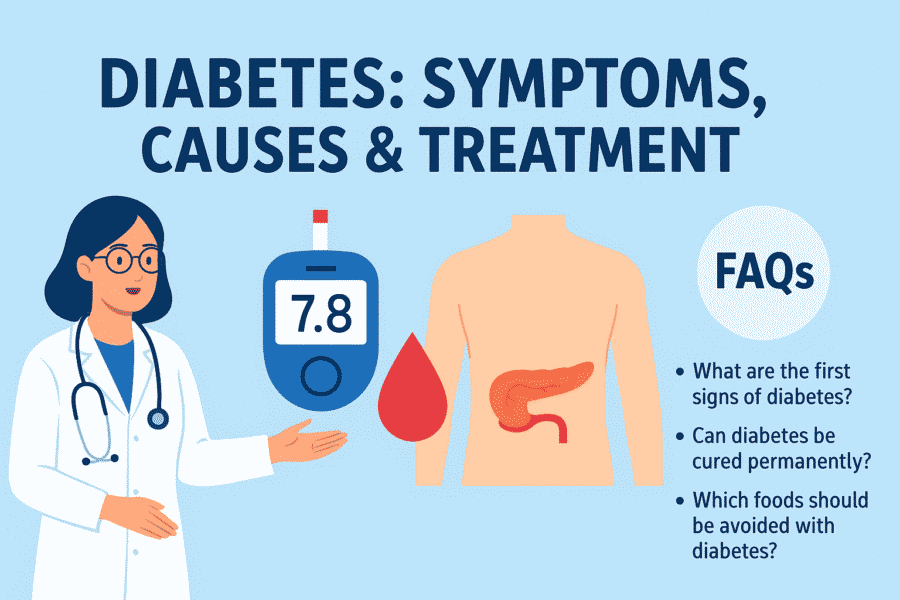
Diabetes has become one of the most common chronic health conditions worldwide. Because of lifestyle changes, unhealthy diets, stress, and genetic factors, the number of people living with diabetes is increasing every year. Therefore, it is important to understand Diabetes: Symptoms, Causes & Treatment so that individuals can identify risks early and take preventive measures. In this blog, we will cover every aspect of diabetes, including what it is, how it develops, its different types, and the most effective management strategies.
What is Diabetes?
Diabetes is a metabolic disorder that affects how the body processes blood sugar, also known as glucose. Since glucose is the main source of energy for the body, diabetes creates imbalances in energy supply. Normally, the hormone insulin helps glucose enter cells to produce energy. However, in diabetes, the body either does not produce enough insulin or cannot use it effectively. As a result, blood sugar levels rise, leading to long-term complications if not managed properly. Because of this, understanding Diabetes: Symptoms, Causes & Treatment becomes essential.
Types of Diabetes
Since diabetes is not a single disease, it is classified into several types. Each type has its own characteristics, causes, and treatment methods.
1. Type 1 Diabetes
Type 1 diabetes is an autoimmune condition where the immune system mistakenly attacks the insulin-producing cells in the pancreas. As a result, insulin production becomes extremely low or absent. Since this type often develops in children or young adults, it is sometimes called juvenile diabetes.
2. Type 2 Diabetes
Type 2 diabetes is the most common form. In this condition, the body either resists insulin or does not use it effectively. Since it develops slowly, many people may not realize they have it until complications appear. Lifestyle factors, such as poor diet and lack of exercise, play a major role.
3. Gestational Diabetes
Gestational diabetes occurs during pregnancy when hormonal changes affect insulin response. Although it often disappears after delivery, women who develop gestational diabetes are at higher risk of developing type 2 diabetes later in life.
4. Prediabetes
Prediabetes is a warning stage where blood sugar levels are higher than normal but not high enough to be diagnosed as diabetes. Since lifestyle changes at this stage can prevent progression, recognizing it early is vital.
Because each type is different, Diabetes: Symptoms, Causes & Treatment must be discussed with proper classification.
Diabetes Symptoms
Recognizing symptoms at the earliest stage helps in timely treatment. Since symptoms can differ between type 1 and type 2 diabetes, being aware of common signs is essential.
Common Symptoms Include:
- Frequent urination
- Excessive thirst
- Unexplained weight loss
- Constant hunger
- Extreme fatigue
- Blurred vision
- Slow healing of wounds
- Frequent infections
Since type 2 diabetes may progress silently, people often ignore early warning signs. Therefore, regular health checkups play a vital role in managing Diabetes: Symptoms, Causes & Treatment.
Causes of Diabetes
Diabetes does not have a single cause. Instead, it results from a combination of genetic, environmental, and lifestyle factors.
Key Causes and Risk Factors:
- Genetics – Family history plays a strong role.
- Obesity – Excess fat, especially around the abdomen, increases insulin resistance.
- Sedentary Lifestyle – Lack of physical activity contributes to weight gain and insulin resistance.
- Unhealthy Diet – Diets rich in processed foods, sugar, and unhealthy fats can raise blood sugar levels.
- Hormonal Changes – Pregnancy hormones can lead to gestational diabetes.
- Pancreatic Disorders – Damage to the pancreas may reduce insulin production.
- Stress & Sleep Issues – Both can influence blood sugar regulation.
Because these causes vary, understanding them is important for proper treatment. This is why guides focusing on Diabetes: Symptoms, Causes & Treatment provide valuable awareness.
Complications of Diabetes
If left untreated, diabetes can lead to severe health issues. Since high blood sugar damages blood vessels and nerves, complications may affect multiple organs.
Long-Term Complications Include:
- Heart disease
- Stroke
- Kidney failure
- Vision problems (diabetic retinopathy)
- Nerve damage (neuropathy)
- Foot ulcers
- Poor wound healing
Therefore, timely diagnosis and effective management of Diabetes: Symptoms, Causes & Treatment prevent these complications.
Diagnosis of Diabetes
Doctors use several tests to diagnose diabetes and monitor blood sugar levels.
Common Diagnostic Tests:
- Fasting Blood Sugar Test – Measures blood glucose after fasting.
- Oral Glucose Tolerance Test (OGTT) – Measures blood sugar after drinking a glucose-rich solution.
- HbA1c Test – Reflects average blood sugar over the last 2–3 months.
- Random Blood Sugar Test – Measures glucose at any time of the day.
Since early diagnosis helps in better treatment outcomes, regular screening is recommended for people at risk.
Treatment of Diabetes
Since diabetes has no permanent cure, management focuses on controlling blood sugar levels. The treatment approach differs for each type of diabetes.
1. Lifestyle Modifications
- Healthy balanced diet
- Regular physical activity
- Weight management
- Stress reduction techniques
2. Medications
Doctors may prescribe oral medicines like metformin for type 2 diabetes. For type 1 diabetes, insulin injections are mandatory.
3. Insulin Therapy
Insulin is required when the body cannot produce enough naturally. Since different types of insulin are available, doctors create personalized treatment plans.
4. Monitoring Blood Sugar
Regular monitoring helps in adjusting diet, exercise, and medicines.
5. Alternative Therapies
Some individuals use yoga, meditation, or herbal supplements alongside medical treatment. However, these should always be guided by professionals.
Because treatment requires consistency, Diabetes: Symptoms, Causes & Treatment must be followed strictly under medical supervision.
Prevention of Diabetes
Although type 1 diabetes cannot be prevented, type 2 diabetes and prediabetes can often be delayed or avoided through lifestyle changes.
Prevention Tips:
- Eat a diet rich in fruits, vegetables, and whole grains
- Exercise at least 30 minutes daily
- Maintain a healthy weight
- Avoid smoking and excessive alcohol
- Get regular health checkups
Therefore, prevention is a crucial part of discussing Diabetes: Symptoms, Causes & Treatment.
Living with Diabetes
Managing diabetes requires a lifelong commitment. Since it affects physical, mental, and emotional health, patients must adopt holistic approaches. Support from family, friends, and healthcare providers plays a vital role in improving quality of life.
FAQs on Diabetes: Symptoms, Causes & Treatment
Q1: What are the first signs of diabetes?
The first signs often include excessive thirst, frequent urination, fatigue, and unexplained weight loss.
Q2: Can diabetes be cured permanently?
Currently, diabetes cannot be cured permanently, but it can be managed effectively with lifestyle changes and treatment.
Q3: Which foods should be avoided with diabetes?
People with diabetes should avoid sugary drinks, processed snacks, fried foods, and foods high in refined carbohydrates.
Q4: Is type 2 diabetes reversible?
With weight loss, exercise, and dietary changes, some people can bring type 2 diabetes into remission, though medical supervision is required.
Q5: How often should blood sugar be tested?
The frequency depends on the type of diabetes and treatment plan. Doctors usually recommend daily monitoring for insulin-dependent patients.
Conclusion
Diabetes has become a global health challenge, but with awareness and proper management, its impact can be reduced. By understanding Diabetes: Symptoms, Causes & Treatment, individuals can take early steps toward prevention and effective care. While lifestyle changes play a vital role, regular medical checkups and adherence to treatment remain the foundation of diabetes management. Therefore, staying informed and proactive is the best way to live a healthy life with diabetes.


