
Writer@Dr.Ram Prakasha PTIntroduction to Indian Diet Chart for Diabetes Patients
When it comes to managing diabetes, food choices matter more than anything else. An Indian diet chart for diabetes patients is not only practical but also sustainable, as it uses simple and easily available foods. Moreover, following a diet tailored for diabetes can help regulate blood sugar levels, reduce complications, and promote overall well-being.
Therefore, in this guide, we will explore the best foods, meal plans, and lifestyle practices for diabetes patients in India. Additionally, we will provide a sample Indian diet chart that combines nutrition, taste, and tradition.
- Fine Motor Activities: Boosting Hand Skills for Lifelong Learning
- Developmental Delay in Babies: Early Signs, Causes, and Effective Support for Healthy Growth
- Pilates Therapy – Complete Professional Details
- What Is Bobath Therapy? What Is Bobath Therapy? A Complete Guide to Neurodevelopmental Treatment What Is Bobath Therapy?
- Best Sensory Processing Therapy for Child: A Complete Parent’s Guide
Importance of a Balanced Indian Diet for Diabetes
Firstly, balance is the key. A balanced Indian diet for diabetes patients includes complex carbohydrates, lean proteins, healthy fats, vitamins, and minerals. Secondly, portion control ensures that calorie intake remains stable. Thirdly, the traditional Indian food system is naturally rich in lentils, vegetables, and spices, which are all diabetes-friendly.
Thus, understanding portion sizes and glycemic index plays a crucial role in controlling diabetes with an Indian diet plan.
Key Principles of Indian Diabetes-Friendly Diet
When preparing an Indian meal plan for diabetes patients, it is essential to follow these principles:
- Always choose complex carbohydrates such as brown rice, millets, and whole wheat.
- Include lean protein sources like lentils, chickpeas, paneer, tofu, and fish.
- Use healthy fats from nuts, seeds, and cold-pressed oils.
- Eat vegetables and salads in large portions to add fiber.
- Drink plenty of water and avoid sugary beverages.
Therefore, adopting these principles ensures long-term blood sugar stability.
Best Foods in Indian Diet Chart for Diabetes Patients
The best foods for diabetes patients in India are easily available in every kitchen. For example:
- Cereals: Brown rice, oats, barley, quinoa, and millets.
- Pulses: Lentils, rajma, chana, and moong dal.
- Vegetables: Bitter gourd, spinach, okra, bottle gourd, and cabbage.
- Fruits: Apple, guava, papaya, pear, and berries.
- Dairy: Low-fat milk, curd, and paneer.
- Proteins: Eggs, fish, chicken breast, and soya products.
In addition, Indian spices such as turmeric, cinnamon, and fenugreek seeds help improve insulin sensitivity naturally.
Foods to Avoid in Indian Diabetes Diet Plan
On the other hand, certain foods must be avoided in a diabetes diet plan in India. For instance:
- White rice and refined flour (maida) products.
- Deep-fried snacks like samosas, pakoras, and chips.
- Sweets made with sugar, jaggery, or condensed milk.
- Sweetened beverages like colas, packaged juices, and milkshakes.
- Excess salt, as it increases the risk of hypertension in diabetes patients.
Consequently, avoiding these foods prevents unnecessary spikes in blood sugar levels.
Sample Indian Diet Chart for Diabetes Patients
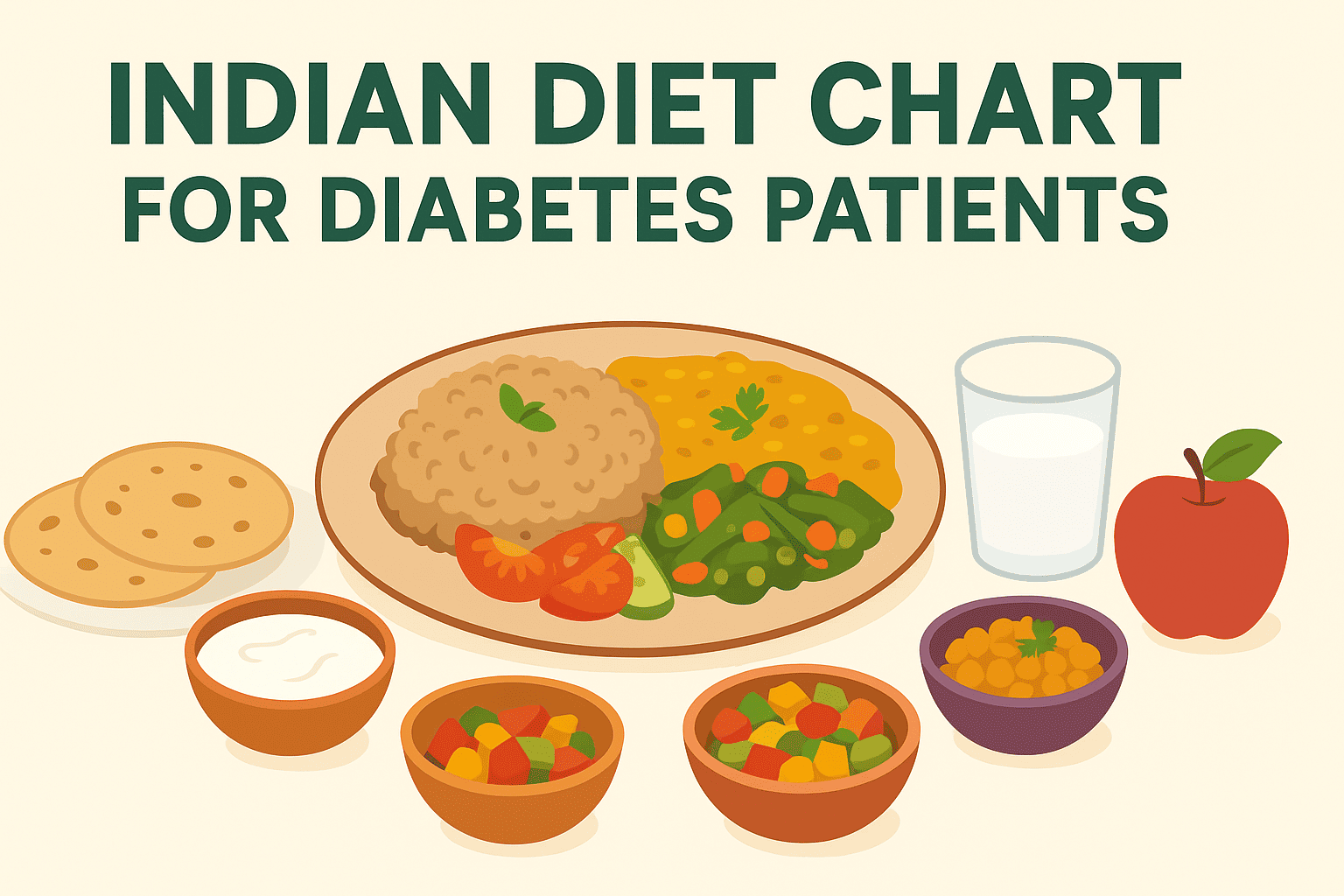
Here is a one-day Indian diet chart for diabetes patients that combines nutrition and taste:
- Early Morning (6:30 AM): Warm water with fenugreek seeds or cinnamon.
- Breakfast (8:00 AM): Vegetable oats or moong dal cheela with mint chutney.
- Mid-Morning (10:30 AM): One guava or a small bowl of papaya.
- Lunch (1:00 PM): 2 multigrain rotis, one bowl of dal, one cup of sabzi, salad, and curd.
- Evening Snack (4:30 PM): Roasted chana or a handful of almonds.
- Dinner (7:30 PM): Brown rice with vegetable curry or grilled fish with sautéed vegetables.
- Bedtime (10:00 PM): One glass of warm turmeric milk without sugar.
This chart can be customized as per personal preferences, but the foundation always remains balanced and portion-controlled.
Indian Vegetarian Diet for Diabetes Patients
A vegetarian Indian diet chart for diabetes patients is rich in plant-based nutrition. Since vegetarian meals rely on pulses, vegetables, fruits, and dairy, they provide enough protein and fiber. In fact, vegetarian diets are known to improve blood sugar control and reduce cholesterol levels naturally.
Hence, choosing more vegetarian meals helps in diabetes management.
Indian Non-Vegetarian Diet for Diabetes Patients
On the contrary, non-vegetarians can also enjoy a non-vegetarian Indian diet chart for diabetes patients. Including lean meats such as chicken and fish supports protein intake and reduces hunger pangs. However, deep-fried meats or red meats must be limited to avoid health complications.
Therefore, a combination of lean animal protein with vegetables is the healthiest option.
Role of Traditional Indian Spices in Diabetes Diet
Interestingly, many traditional Indian spices are beneficial for diabetes patients. For instance:
- Cinnamon: Helps lower blood sugar levels.
- Fenugreek seeds: Improve insulin sensitivity.
- Turmeric: Reduces inflammation and supports immunity.
- Ginger and garlic: Improve metabolism and heart health.
Thus, incorporating these spices in an Indian diet chart for diabetes patients adds both flavor and health benefits.
Lifestyle Tips with Indian Diabetes Diet
Food alone is not enough. Alongside a healthy Indian diet for diabetes patients, lifestyle changes are equally important. For example:
- Practice regular exercise like yoga, walking, or cycling.
- Manage stress through meditation and breathing exercises.
- Maintain proper sleep of 7–8 hours daily.
- Monitor blood sugar levels regularly.
Therefore, combining diet with lifestyle ensures effective diabetes management.
Weekly Indian Meal Plan for Diabetes Patients
A weekly Indian meal plan for diabetes patients provides variety and prevents boredom. It includes different combinations of cereals, pulses, and vegetables each day. Moreover, such rotation ensures complete nutrition without monotony.
Hence, preparing a weekly meal chart helps in better adherence to the diabetes diet.
Common Mistakes in Following Indian Diabetes Diet
Although many follow a diet, mistakes often occur. Common errors include:
- Skipping meals due to busy schedules.
- Consuming too many fruits at one time.
- Overeating even healthy foods.
- Using excessive oil in cooking.
Consequently, avoiding these mistakes makes the diet plan more effective.
FAQs on Indian Diet Chart for Diabetes Patients
1. Can rice be eaten in an Indian diabetes diet?
Yes, rice can be eaten, but only brown rice or parboiled rice in limited quantities.
2. Is fruit allowed for diabetes patients in India?
Yes, fruits like apple, papaya, guava, and pear are safe in moderation.
3. How many chapatis can a diabetes patient eat?
Usually, 2 multigrain chapatis per meal are sufficient, depending on activity levels.
4. Is milk good for diabetes?
Yes, low-fat milk without sugar is beneficial.
5. Can diabetes patients eat sweets occasionally?
Sugar-free sweets or jaggery alternatives may be consumed in moderation, but avoiding them is better.
6. Which Indian breakfast is best for diabetes patients?
Vegetable oats, poha with vegetables, or moong dal cheela are ideal.
7. Should diabetes patients avoid potatoes completely?
Boiled or baked potatoes in small quantities can be included occasionally, but fried potatoes must be avoided.
Conclusion
To sum up, following an Indian diet chart for diabetes patients is the most sustainable way to manage blood sugar. With the right combination of complex carbohydrates, proteins, healthy fats, and vegetables, diabetes can be controlled naturally. Moreover, traditional Indian foods and spices add both flavor and therapeutic value.
Therefore, adopting a balanced Indian diet along with exercise, stress management, and proper sleep ensures long-term health for diabetes patients.
Diet India