
Introduction
Parkinson’s Disease is a chronic and progressive neurological condition that affects millions of people worldwide. Parkinson’s Disease is a disorder Moreover, it is a disorder that primarily impacts movement, balance, and coordination. Therefore, it is essential to spread awareness about the causes, symptoms, treatments, and available lifestyle support. Consequently, by understanding Parkinson’s Disease in detail, patients and families can manage it more effectively. In addition, healthcare professionals continue to explore new approaches that offer better outcomes and improved quality of life.
What is Parkinson’s Disease?
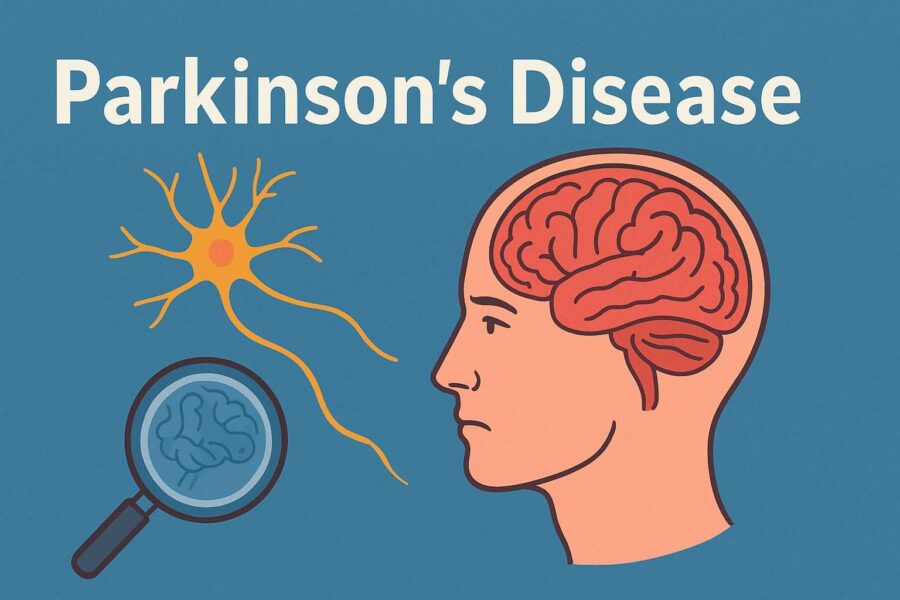
Parkinson’s Disease is a disorder of the nervous system that mainly impacts movement. In fact, it occurs because of the loss of nerve cells in a specific part of the brain called the substantia nigra. As a result, there is a reduction in dopamine, which is a vital neurotransmitter responsible for smooth and controlled movements. Consequently, individuals with Parkinson’s Disease experience tremors, stiffness, slowness of movement, and impaired balance. Furthermore, the disease is more common in older adults, although it can appear in younger people as well.
Causes of Parkinson’s Disease
Although the exact cause of Parkinson’s Disease is still unknown, researchers have identified several contributing factors.
- Genetics – Some people inherit gene mutations that increase their risk. However, this accounts for only a small percentage of cases.
- Environmental Triggers – Continuous exposure to toxins, pesticides, or heavy metals may increase risk. Therefore, environmental factors cannot be ignored.
- Age – Parkinson’s Disease usually develops in people over the age of 60. Consequently, age is one of the strongest risk factors.
- Gender – Men are more likely to develop the condition compared to women. As a result, gender plays a noticeable role.
- Oxidative Stress – Damage caused by free radicals can accelerate the loss of brain cells. Hence, oxidative stress is another important factor.
Therefore, it is clear that Parkinson’s Disease arises from a combination of genetic and environmental influences rather than a single cause.
Symptoms of Parkinson’s Disease
The symptoms of Parkinson’s Disease vary from person to person. However, they usually develop gradually and worsen over time.
Motor Symptoms
- Tremors or shaking, usually in the hands, arms, or legs.
- Slowness of movement, also called bradykinesia.
- Muscle stiffness and rigidity.
- Impaired balance and frequent falls.
Non-Motor Symptoms
- Sleep disturbances such as insomnia.
- Memory problems or difficulty concentrating.
- Depression, anxiety, and mood changes.
- Loss of sense of smell.
- Constipation and digestive issues.
Because these symptoms progress slowly, many patients may not realize they have Parkinson’s Disease in the early stages.
Stages of Parkinson’s Disease
Parkinson’s Disease usually advances through five stages.
- Stage 1 – Symptoms are mild and do not interfere with daily activities. Tremors may occur only on one side of the body.
- Stage 2 – Symptoms worsen and affect both sides of the body. Daily tasks become slightly more difficult.
- Stage 3 – Balance problems appear, and falls may occur. Independence becomes more challenging.
- Stage 4 – Symptoms are severe, and assistance is required for most daily tasks.
- Stage 5 – The patient may become bedridden and require round-the-clock care.
Consequently, understanding these stages helps families prepare for the changes that lie ahead.
Diagnosis of Parkinson’s Disease–Parkinson’s Disease is a disorder
There is no single test that can confirm Parkinson’s Disease. Instead, doctors rely on a combination of medical history, neurological exams, and observation of symptoms. In addition, imaging tests such as MRI or CT scans may be used to rule out other conditions. Furthermore, specialized scans like DaTscan can help assess dopamine activity in the brain.
Therefore, early diagnosis plays a vital role in effective management.
Treatment Options for Parkinson’s Disease
Although there is no cure for Parkinson’s Disease, several treatments can reduce symptoms and improve quality of life.
Medications
- Levodopa: The most effective drug that replaces dopamine in the brain.
- Dopamine Agonists: Drugs that mimic dopamine effects.
- MAO-B Inhibitors: Medications that slow down dopamine breakdown.
Surgical Options
- Deep Brain Stimulation (DBS): Electrodes are implanted in the brain to regulate abnormal signals.
Lifestyle Management
- Regular exercise to maintain mobility.
- Healthy diet rich in antioxidants.
- Physical therapy, occupational therapy, and speech therapy.
Therefore, treatment should be personalized to suit each patient’s unique needs.
Living with Parkinson’s Disease
Living with Parkinson’s Disease is challenging, but it is manageable with the right support. In fact, many people live fulfilling lives despite the condition. Moreover, patient support groups provide emotional strength and practical advice. Additionally, caregivers play an essential role in daily routines and mental well-being.
Therefore, a positive attitude, community support, and ongoing medical care are essential for improving quality of life.
Latest Research and Future Hope
Researchers are working tirelessly to discover new treatments for Parkinson’s Disease. Moreover, advances in genetics, stem cell therapy, and neuroprotective drugs offer new hope. In addition, wearable technology and AI tools are being developed to monitor symptoms and improve personalized treatment.
Consequently, while a cure does not yet exist, future breakthroughs may transform the way Parkinson’s Disease is managed.
Prevention and Risk Reduction
Although Parkinson’s Disease cannot be entirely prevented, adopting a healthy lifestyle may lower the risk.
- Regular physical exercise supports brain health.
- A balanced diet with fruits, vegetables, and omega-3 fatty acids may be protective
- Avoiding exposure to harmful chemicals reduces risk.
- Stress management and mental well-being support brain function.
Therefore, proactive health measures are beneficial for long-term neurological health.
Frequently Asked Questions (FAQs) about Parkinson’s Disease
1. What is the main cause of Parkinson’s Disease?
The exact cause is unknown, but it results from a combination of genetics, environmental factors, and loss of dopamine-producing brain cells.
2. Can Parkinson’s Disease be cured?
Currently, there is no cure. However, medications, surgery, and therapies can significantly improve quality of life.
3. At what age does Parkinson’s Disease usually start?
Most people develop symptoms after the age of 60, although it can occur earlier in some cases.
4. How fast does Parkinson’s Disease progress?
The progression varies. For some, symptoms worsen gradually over many years, while for others, the decline is faster.
5. Can exercise help with Parkinson’s Disease?
Yes, regular exercise improves balance, mobility, and overall well-being in people with Parkinson’s Disease.
6. Is Parkinson’s Disease genetic?
Only a small percentage of cases are inherited. Most cases result from a mix of genetic and environmental factors.
7. What foods are good for Parkinson’s Disease?
A diet rich in fruits, vegetables, whole grains, and omega-3 fatty acids supports brain health.
Conclusion
In conclusion, Parkinson’s Disease is a progressive neurological disorder that impacts millions of lives. Although it cannot be cured, treatments and lifestyle management strategies help patients live meaningful lives. Furthermore, continuous research and technological advancements bring hope for more effective solutions in the near future.
Therefore, raising awareness, supporting patients, and encouraging healthy living are crucial steps in managing Parkinson’s Disease.


