

Author Bio: Dr. Ram Prakasha BPTh
Written by a Physiotherapy and Public Health professional with experience in neurological rehabilitation and health awareness. The content is intended for educational purposes only.
Stroke treatment is one of the most serious health conditions affecting millions of people worldwide. However, with early action and proper rehabilitation, recovery is possible. Therefore, understanding stroke from both a medical and physiotherapy perspective is extremely important. Moreover, physiotherapy plays a life-changing role in improving independence, mobility, and quality of life after stroke.
What Is a Stroke?
A Stroke treatment occurs when the blood supply to the brain is suddenly interrupted or reduced. As a result, brain cells do not receive enough oxygen and nutrients. Consequently, brain cells begin to die within minutes. Therefore, stroke is considered a medical emergency.
Types of Stroke
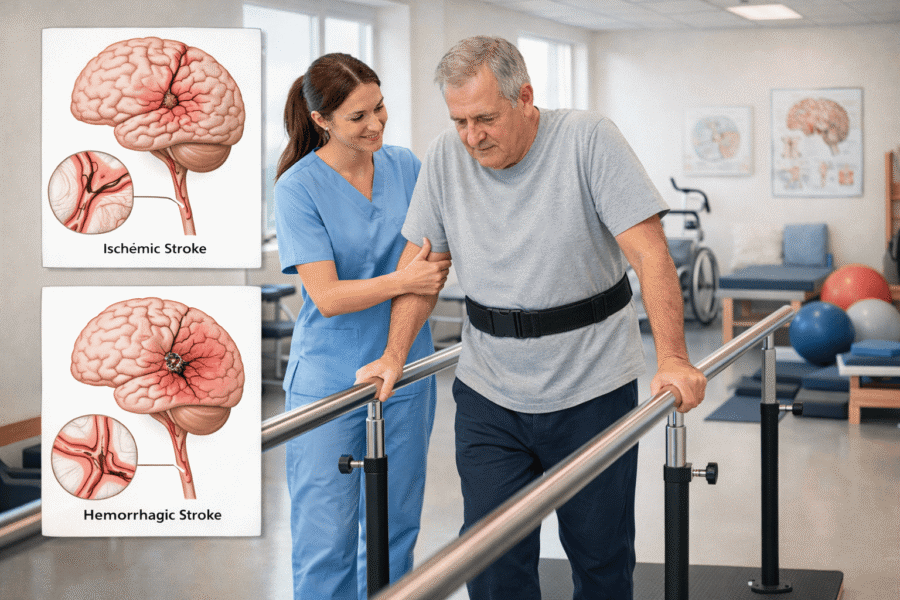
There are mainly three types of Stroke treatment. First, ischemic stroke occurs due to blocked blood vessels. Second, hemorrhagic stroke happens due to bleeding in the brain. Third, transient ischemic attack (TIA) is a temporary stroke with warning signs.
Although the causes differ, the impact on brain function can be severe in all cases.
Common Causes of Stroke
Stroke does not happen suddenly without risk factors. Instead, it develops due to long-term health issues. Therefore, identifying causes is essential.
Common stroke causes include:
- High blood pressure
- Diabetes
- High cholesterol
- Smoking
- Obesity
- Heart disease
- Physical inactivity
- Excessive alcohol consumption
Because of these factors, lifestyle changes are critical for stroke prevention.
Early Warning Signs and Symptoms of Stroke
Recognizing stroke symptoms early can save lives. Therefore, quick action is necessary.
Common stroke symptoms include:
- Sudden weakness on one side of the body
- Difficulty speaking or understanding speech
- Facial drooping
- Loss of balance
- Sudden vision problems
- Severe headache
Because symptoms appear suddenly, immediate medical attention is required.
Diagnosis and Medical Treatment of Stroke
Once Stroke treatment is suspected, diagnosis begins immediately. Doctors use CT scans, MRI, blood tests, and neurological assessments. After diagnosis, stroke treatment depends on the type and severity.
Medical treatment may include:
- Clot-dissolving medications
- Blood pressure control
- Surgery in hemorrhagic stroke
- Long-term medication for prevention
However, medical treatment alone is not enough. Therefore, rehabilitation becomes essential.
Why Physiotherapy Is Crucial After Stroke
Physiotherapy is one of the most important parts of stroke rehabilitation. Because stroke affects movement, balance, and coordination, physiotherapy focuses on restoring function.
Goals of Physiotherapy After Stroke
The main goals include:
- Improving muscle strength
- Restoring movement
- Enhancing balance and coordination
- Reducing spasticity
- Promoting independence in daily activities
Therefore, physiotherapy improves both physical and mental recovery.
Stroke Rehabilitation Through Physiotherapy
Stroke rehabilitation begins as early as possible. In fact, early physiotherapy significantly improves outcomes.
Assessment by a Physiotherapist
First, the physiotherapist evaluates:
- Muscle tone
- Range of motion
- Balance
- Gait
- Functional ability
Based on assessment, a personalized treatment plan is created.
Physiotherapy Techniques Used in Stroke Recovery
Different physiotherapy techniques are used depending on patient needs. Moreover, exercises are progressed gradually.
1. Motor Relearning Program
This approach focuses on relearning normal movement patterns. Therefore, patients practice functional movements repeatedly.
2. Strengthening Exercises
Because muscles become weak after a stroke, strengthening exercises are essential. As a result, patients regain control and stability.
3. Balance and Coordination Training
Balance training reduces the risk of falls. Therefore, standing and walking confidence improves.
4. Gait Training
Walking is often affected after a stroke. Hence, physiotherapists use gait training with or without assistive devices.
5. Neuroplasticity-Based Exercises
The brain has the ability to reorganize itself. Therefore, repetitive physiotherapy exercises enhance neuroplasticity.
6. Functional Electrical Stimulation (FES)
Electrical stimulation activates weak muscles. Consequently, movement improves.
7. Spasticity Management
Stretching, positioning, and manual techniques reduce muscle stiffness. As a result, movement becomes smoother.
Benefits of Physiotherapy in Stroke Patients
Physiotherapy offers multiple long-term benefits. Therefore, it should never be ignored.
Major benefits include:
- Improved mobility
- Increased independence
- Better posture and balance
- Reduced complications
- Enhanced quality of life
- Psychological confidence
Because of these benefits, physiotherapy is a cornerstone of stroke care.
Home-Based Physiotherapy After Stroke
After hospital discharge, home-based physiotherapy is extremely helpful. Therefore, continuity of care is maintained.
Home programs may include:
- Bed mobility exercises
- Sitting and standing training
- Walking practice
- Hand and arm exercises
- Daily activity training
Moreover, caregiver education is also essential.
Role of Caregivers in Stroke Recovery
Caregivers play a supportive role in stroke rehabilitation. Therefore, their involvement improves outcomes.
Caregivers can help by:
- Encouraging regular exercises
- Maintaining a positive environment
- Preventing falls
- Supporting emotional health
Because recovery is slow, patience is necessary.
Stroke Prevention Through Physiotherapy and Lifestyle
Physiotherapy is not only for recovery but also for prevention. Therefore, physical activity reduces stroke risk.
Preventive measures include:
- Regular exercise
- Blood pressure control
- Weight management
- Stress reduction
- Healthy diet
Thus, physiotherapy promotes long-term brain health.
Psychological Impact of Stroke and Physiotherapy Support
Stroke often leads to depression and anxiety. Therefore, emotional support is vital.
Physiotherapists motivate patients through goal-oriented therapy. Consequently, confidence and self-belief increase.
How Long Does Stroke Recovery Take?
Stroke recovery varies for every individual. However, most improvement occurs in the first six months. Nevertheless, progress can continue for years with consistent physiotherapy.
Factors affecting recovery include:
- Stroke severity
- Age
- Early intervention
- Rehabilitation intensity
- Motivation
Therefore, regular physiotherapy sessions are essential.
FAQs: Stroke and Physiotherapy
1. Can physiotherapy help after a stroke?
Yes, physiotherapy significantly improves movement, balance, and independence after stroke.
2. When should physiotherapy start after a stroke?
Physiotherapy should start as early as medically possible, often within 24–48 hours.
3. How often is physiotherapy needed after a stroke?
Usually, physiotherapy is recommended 5–6 days per week initially, depending on condition.
4. Can stroke patients walk again?
Yes, with proper physiotherapy and consistent training, many stroke patients regain walking ability.
5. Is home physiotherapy effective after a stroke?
Yes, home-based physiotherapy is very effective for long-term recovery.
6. Does physiotherapy reduce stroke complications?
Yes, physiotherapy reduces stiffness, pain, falls, and dependency.
7. Can stroke be prevented with exercise?
Regular physical activity significantly reduces the risk of stroke.
Conclusion
Stroke is a life-altering condition. However, recovery is possible with early treatment and structured rehabilitation. Therefore, physiotherapy plays a vital role in restoring movement, independence, and dignity. Moreover, consistent physiotherapy not only improves physical recovery but also enhances mental strength. Ultimately, combining medical care with physiotherapy creates the best outcomes for stroke patients.