

Author Bio: Dr. Ram Prakasha BPTh
Written by a Physiotherapy and Public Health professional with experience in neurological rehabilitation and health awareness. The content is intended for educational purposes only.
Overview
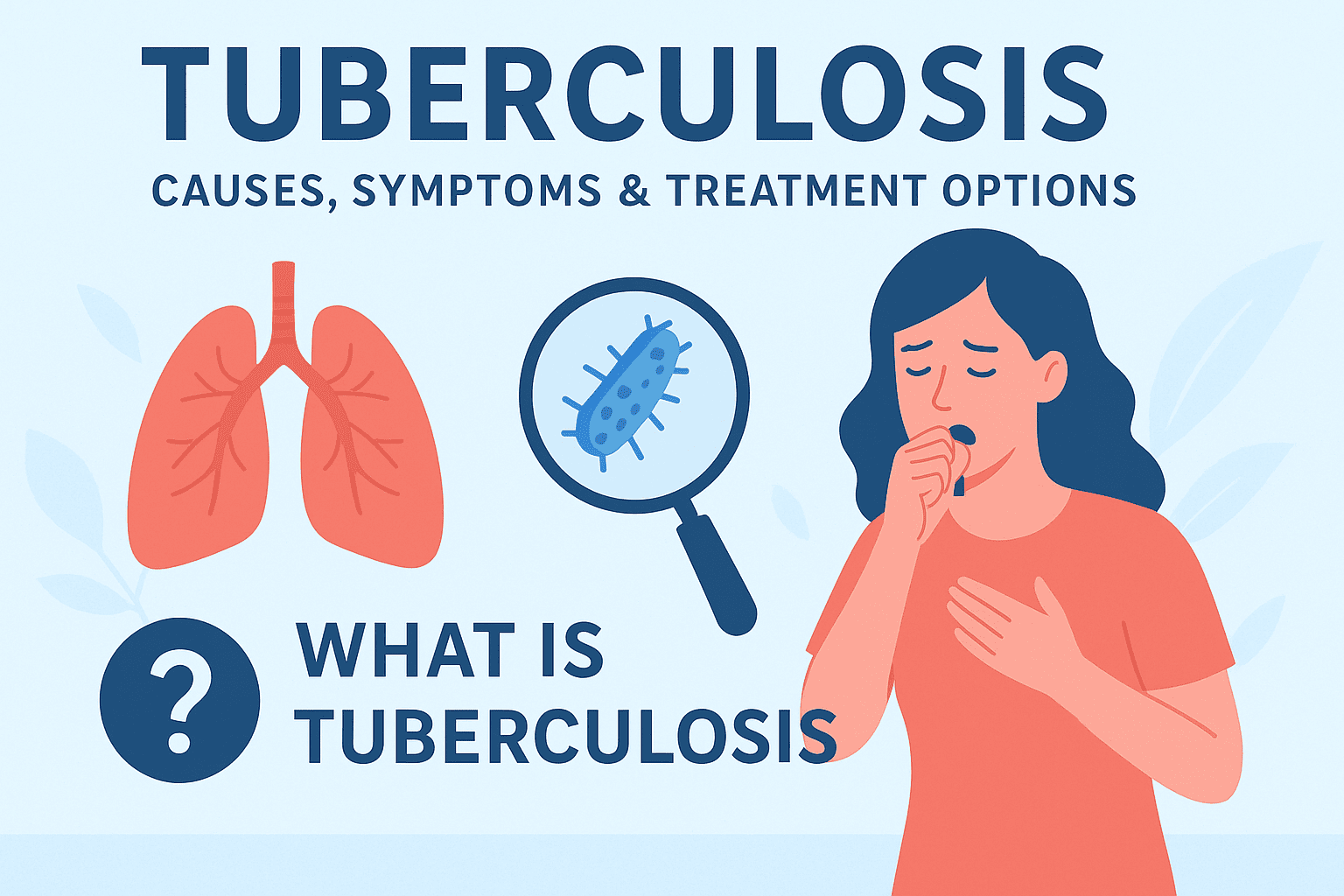
Tuberculosis: Cause, often referred to as TB, is one of the world’s most persistent infectious diseases. Despite major medical advances, TB remains a global health challenge. Because it spreads easily and can affect people of all ages, understanding its causes, recognizing its symptoms, and exploring treatment options are essential.
This article will provide a comprehensive guide to Tuberculosis: Causes, Symptoms & Treatment Options, highlighting prevention strategies, risk factors, and modern medical approaches.
Understanding Tuberculosis: An Overview
First, it is important to know what tuberculosis is. TB is an infectious disease caused primarily by the bacterium Mycobacterium tuberculosis. Furthermore, it typically affects the lungs, although it can also impact the kidneys, spine, brain, and other organs.
Moreover, TB spreads through the air when an infected person coughs, sneezes, or speaks. Because of this airborne transmission, close contact with TB patients increases the risk of infection.
Tuberculosis Causes: How TB Develops and Spreads
When discussing Tuberculosis: Causes, Symptoms & Treatment Options, we must first address the causes.
- Bacterial infection – The main cause is the bacterium Mycobacterium tuberculosis.
- Airborne transmission – TB bacteria spread through microscopic droplets released into the air.
- Weakened immune system – Individuals with HIV/AIDS, diabetes, or other chronic conditions are more vulnerable.
- Poor living conditions – Overcrowded or poorly ventilated spaces allow TB to spread faster.
- Malnutrition and poverty – Lack of proper nutrition weakens immunity, making infection more likely.
Because TB spreads so easily, preventive measures and early treatment are crucial to controlling outbreaks.
Tuberculosis Symptoms: Recognizing Early Warning Signs
Next, let us focus on symptoms. Recognizing TB symptoms early increases the chances of effective treatment.
Common Symptoms of Pulmonary Tuberculosis
- Persistent cough lasting three weeks or more
- Coughing up blood or mucus
- Chest pain during breathing or coughing
- Fatigue and weakness
- Unexplained weight loss
- Fever and night sweats
Because these symptoms overlap with other respiratory illnesses, testing is necessary for confirmation.
Symptoms of Extrapulmonary Tuberculosis
TB does not always remain in the lungs. Extrapulmonary TB can affect other organs and show additional signs:
- Kidney TB – Blood in urine, flank pain
- Spinal TB – Back pain, stiffness, deformities
- Brain TB (tuberculous meningitis) – Severe headaches, nausea, confusion, seizures
- Lymph node TB – Swelling of lymph glands, tenderness
Therefore, paying attention to unusual or persistent health issues is vital for timely diagnosis.
Tuberculosis Diagnosis: How TB Is Detected
To fully understand Tuberculosis: Causes, Symptoms & Treatment Options, we must explore diagnostic methods.
- Tuberculin skin test (Mantoux test) – Injection of TB proteins under the skin to check for immune response.
- Blood tests – Interferon-Gamma Release Assays (IGRAs) measure the immune reaction to TB bacteria.
- Chest X-rays – Detect lung damage or abnormalities caused by TB.
- Sputum tests – Laboratory analysis of mucus for TB bacteria.
Because early detection improves treatment success, these diagnostic tools are essential in global TB control.
Tuberculosis Treatment Options: Medical and Lifestyle Approaches
When discussing Tuberculosis: Causes, Symptoms & Treatment Options, treatment becomes the most critical section.
Standard TB Treatment
The most common TB treatment is a course of antibiotics lasting at least six months. Medications may include:
- Isoniazid
- Rifampicin
- Ethambutol
- Pyrazinamide
Because TB bacteria are slow-growing, treatment must be consistent and long-term. Skipping doses increases the risk of drug-resistant TB.
Multi-Drug Resistant Tuberculosis (MDR-TB)
In some cases, TB bacteria become resistant to first-line drugs. MDR-TB requires second-line medications, which are more expensive and may have stronger side effects. Therefore, strict adherence to medical advice is critical.
Lifestyle Support in TB Treatment
- Eating a balanced diet to strengthen immunity
- Getting enough rest to support recovery
- Avoiding smoking and alcohol to reduce strain on the lungs
- Following up with regular medical check-ups
Because TB is both medical and lifestyle-related, combining proper treatment with supportive habits increases recovery success.
Tuberculosis Prevention: Reducing the Risk
Preventing TB is just as important as treating it. Strategies include:
- Vaccination – The Bacillus Calmette-Guerin (BCG) vaccine offers protection, especially for children.
- Infection control – Ensuring proper ventilation, wearing masks, and maintaining hygiene in high-risk areas.
- Regular screenings – Especially for healthcare workers or those in contact with TB patients.
- Healthy lifestyle – Maintaining strong immunity through diet, exercise, and stress management.
Therefore, prevention requires both personal responsibility and public health measures.
Tuberculosis Risk Factors: Who Is More Vulnerable?
Not everyone exposed to TB develops the disease. However, certain groups face higher risks:
- People with HIV or other immune-compromising conditions
- Individuals with diabetes or chronic kidney disease
- Smokers and alcohol-dependent individuals
- Malnourished populations
- People living in crowded or poorly ventilated areas
Since these risk factors increase vulnerability, awareness and preventive action are critical.
Tuberculosis: Causes, Symptoms & Treatment Options in Children
TB in children often presents differently than in adults. Because their immune systems are still developing, children may experience:
- Swollen lymph nodes
- Poor growth and weight loss
- Persistent fever
- General irritability
Treatment for children follows similar guidelines but may require adjusted dosages. Therefore, pediatric TB must be managed with extra care.
Tuberculosis Complications: What Happens Without Treatment
If left untreated, TB can cause serious complications, such as:
- Lung damage and respiratory failure
- Spread to bones and joints, leading to deformities
- Meningitis, which may cause brain damage
- Increased risk of death
Because untreated TB also spreads to others, timely medical attention protects both individuals and communities.
Global Impact of Tuberculosis
TB is one of the top 10 causes of death worldwide, with millions of new cases reported each year. Although medical advances exist, poverty, limited healthcare access, and drug-resistant strains make TB a continuing challenge.
International organizations such as the World Health Organization (WHO) aim to eliminate TB through prevention programs, awareness campaigns, and better treatment availability.
FAQs on Tuberculosis: Causes, Symptoms & Treatment Options
Q1: Is tuberculosis curable?
Yes, with proper antibiotic treatment and adherence to medication, TB is curable in most cases.
Q2: Can TB spread through sharing food?
No, TB spreads mainly through airborne droplets, not through food or casual contact.
Q3: What is the difference between latent TB and active TB?
Latent TB means the bacteria are present but inactive, showing no symptoms. Active TB means the infection is active and contagious.
Q4: How long does TB treatment take?
Most treatments last at least six months, but resistant cases may require longer therapy.
Q5: Can TB come back after treatment?
Yes, reinfection or relapse may occur, especially if treatment was incomplete or immunity is weak.
Final Thoughts on Tuberculosis: Causes, Symptoms & Treatment Options
In conclusion, tuberculosis remains a major health concern globally. Understanding Tuberculosis: Causes, Symptoms & Treatment Options empowers individuals to take preventive steps, recognize symptoms early, and seek timely treatment.
Because TB is curable with consistent care, spreading awareness, strengthening immunity, and following medical guidance can protect communities. Ultimately, defeating TB requires both individual responsibility and collective healthcare action.
All Medical content is based on verified sources such as ICMR, AIIMS, and MoHFW India


