Overviews
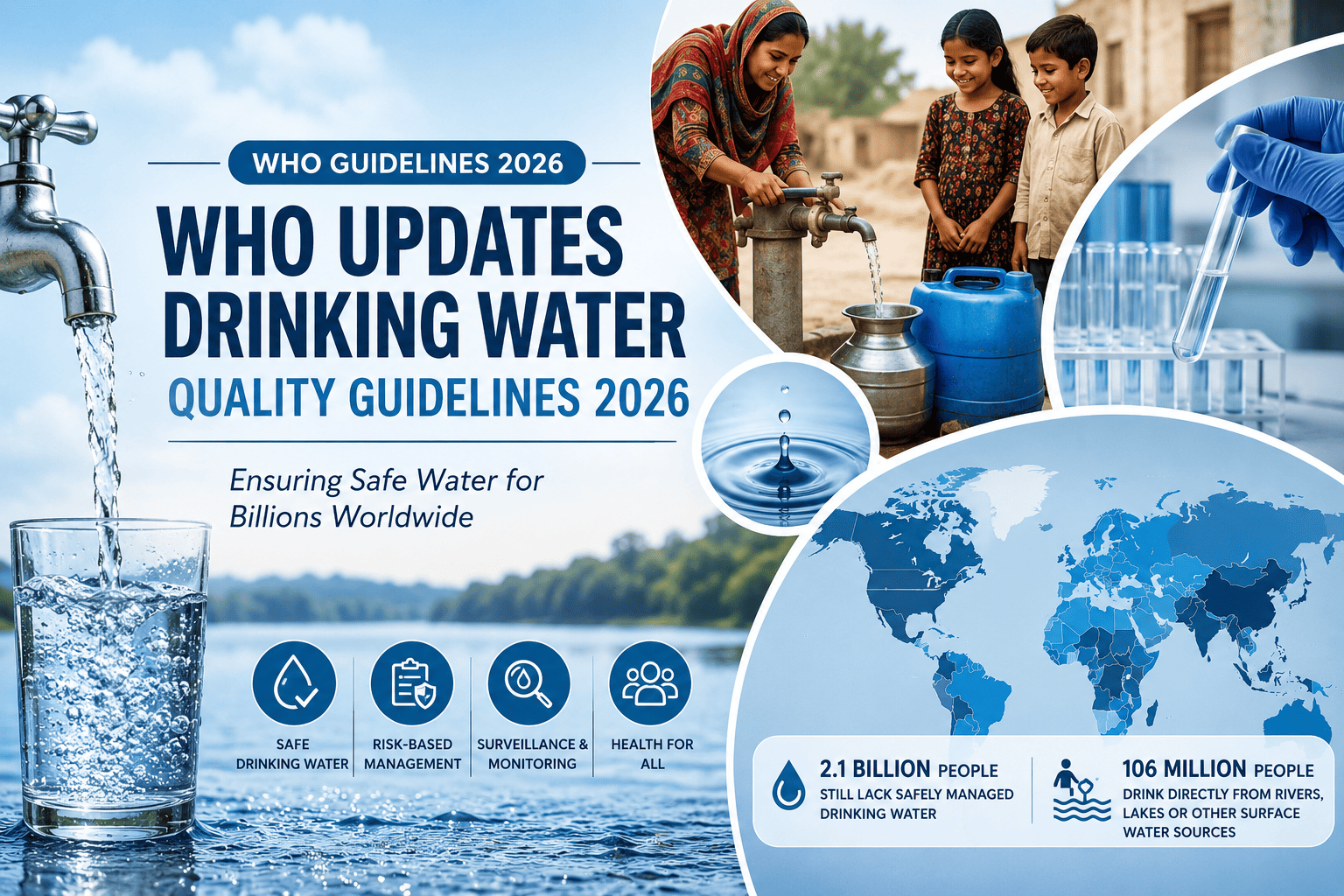
The World Health Organization (WHO) has released updated Guidelines for Drinking-Water Quality, providing the latest recommendations to help countries ensure safe drinking water for their populations. Despite significant progress worldwide, approximately 2.1 billion people still do not have access to safely managed drinking water, and around 106 million people continue to rely directly on rivers, lakes, and other surface water sources.
Why These New Guidelines Matter
Safe drinking water is essential for good health, human development, and overall well-being. The updated WHO guidelines aim to help governments strengthen water quality standards, improve surveillance systems, and adopt effective risk management practices to prevent water-related diseases.
According to WHO, countries should focus on preventing contamination before it becomes a public health threat rather than only responding after problems occur.
Key Updates in the New Guidelines
1. Stronger Risk-Based Water Safety Management
WHO continues to recommend Water Safety Plans (WSPs), which help identify and manage risks throughout the water supply system. The updated guidance includes practical lessons learned from countries already implementing these plans.
2. Improved Guidance for Small Water Supplies
Special attention has been given to small and community-based water systems, which often face greater challenges in maintaining safe drinking water.
3. Enhanced Focus on Microbial Contamination
Microbial contamination remains the biggest threat to drinking water safety. The updated guidelines provide stronger recommendations for managing bacteria, viruses, and other pathogens that can spread through contaminated water.
4. Updated Information on Chemical Hazards
WHO has revised guidance regarding certain chemicals and pesticides used in vector control programs, ensuring countries have access to the latest scientific evidence.
Framework for Safe Drinking Water
WHO’s framework for safe drinking water is built on three key pillars:
- Establishing health-based water quality targets.
- Proactive risk management through Water Safety Plans.
- Independent surveillance and monitoring systems.
This approach helps ensure that drinking water remains safe from source to consumer.
Looking Ahead
WHO has announced plans to begin work on the fifth edition of the Drinking-Water Quality Guidelines. Future updates will include detailed reviews of emerging contaminants such as:
- PFAS (Per- and Polyfluoroalkyl Substances)
- Disinfection By-Products (DBPs)
WHO will also support countries through webinars, technical briefings, and policy guidance to improve implementation worldwide.
Conclusion
The updated WHO Drinking Water Quality Guidelines represent an important step toward reducing waterborne diseases and improving public health globally. As billions of people still lack access to safe drinking water, stronger regulations, better monitoring, and proactive risk management will be essential to achieving universal access to clean and safe water.
Source: World Health Organization (WHO)
trending post
L1-79 and Autism Spectrum Disorder: What Does the Research Say?

Does Night Shift Work Increase Osteoporosis Risk?

Stroke: Causes, Symptoms, Treatment, and the Powerful Role of Physiotherapy in Recovery

Pneumonia: Causes, Symptoms, Diagnosis, and Treatment from a Physiotherapy Perspective
Alzheimer’s Disease: Causes, Symptoms, Stages, and Treatment from a Physiotherapy Perspective