
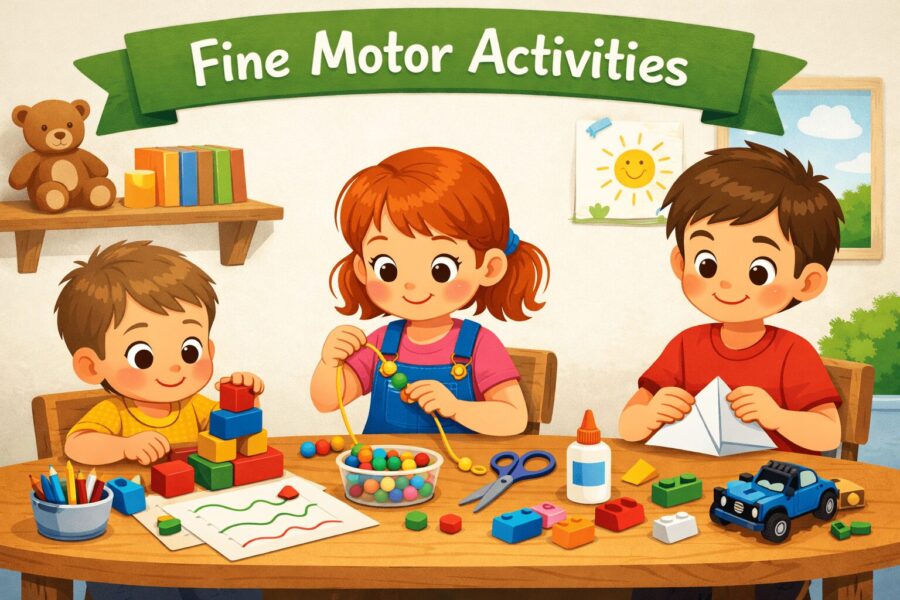
Fine Motor Activities: Skills
Fine motor activities play a powerful role in a child’s physical, cognitive, and academic development. In today’s fast-paced digital world, children often spend more time on screens and less time using their hands for meaningful tasks. As a result, developing strong hand muscles, coordination, and control becomes even more essential. Therefore, incorporating structured and playful fine motor activities into daily routines can significantly improve writing skills, independence, creativity, and overall confidence.
Moreover, parents, teachers, therapists, and caregivers increasingly recognize the importance of strengthening small hand muscles early in life. Consequently, understanding how fine motor activities support development helps adults create enriching environments that promote growth naturally and effectively.
What Are Fine Motor Skills?
Fine motor skills refer to the coordination of small muscles in the hands, fingers, and wrists in connection with the eyes. In other words, these skills enable children to perform precise movements such as buttoning a shirt, holding a pencil, cutting with scissors, or tying shoelaces.
Furthermore, fine motor skills depend on hand strength, bilateral coordination, finger isolation, and visual-motor integration. Therefore, when children participate in consistent fine motor activities, they gradually improve dexterity and control.
Additionally, these skills do not develop automatically. Instead, they grow through repeated practice and purposeful play. Consequently, engaging children in hands-on experiences supports both physical and neurological development.
Why Fine Motor Activities Are Important
Fine Motor Activities: Skills First and foremost, fine motor activities prepare children for academic success. For example, writing, drawing, and coloring all require controlled finger movements. Therefore, strengthening small muscles enhances handwriting quality and speed.
Moreover, fine motor activities promote independence. When children can zip their jackets, feed themselves, or open containers, they build self-confidence. As a result, they feel more capable in everyday situations.
In addition, fine motor activities support cognitive development. Since the brain and hands work closely together, manipulating small objects stimulates neural connections. Consequently, problem-solving skills and attention span improve over time.
Finally, fine motor activities encourage creativity. Through crafting, building, and sculpting, children express ideas visually and tangibly. Therefore, artistic exploration becomes both enjoyable and developmentally beneficial.
Developmental Milestones for Fine Motor Skills
Although every child develops at their own pace, general milestones provide helpful guidance.
- Infants (0–12 months): Grasping toys, transferring objects between hands
- Toddlers (1–3 years): Stacking blocks, scribbling, turning pages
- Preschoolers (3–5 years): Cutting with scissors, drawing shapes, buttoning clothes
- School-Age Children: Writing neatly, tying shoelaces, detailed drawing
Therefore, introducing age-appropriate fine motor activities ensures steady progress. However, if significant delays appear, consulting an occupational therapist may provide additional support.
Easy Fine Motor Activities for Toddlers
1. Playdough Manipulation
First, give children soft playdough. Then, encourage rolling, pinching, flattening, and shaping. Consequently, hand strength and finger control improve naturally.
2. Stacking Blocks
Next, provide wooden or plastic blocks. As children stack and balance pieces, they refine hand-eye coordination. Therefore, simple construction becomes a powerful fine motor activity.
3. Sticker Peeling
Additionally, peeling and placing stickers requires finger precision. As a result, toddlers strengthen their pincer grasp.
4. Water Pouring Practice
Moreover, pouring water from one cup to another builds wrist stability and control. Consequently, this practical life task supports early independence.
Creative Fine Motor Activities for Preschoolers
1. Cutting with Scissors
Although supervision is necessary, cutting paper along lines strengthens hand muscles. Furthermore, it improves bilateral coordination because one hand holds the paper while the other cuts.
2. Bead Stringing
Similarly, threading beads onto a string requires concentration and control. Therefore, this activity enhances precision and patience.
3. Finger Painting
In addition, finger painting allows sensory exploration while strengthening finger isolation. As a result, children develop creativity alongside motor skills.
4. Clothespin Games
Likewise, clipping clothespins onto cardboard shapes builds finger strength. Consequently, this playful exercise becomes an effective fine motor activity.
Fine Motor Activities for School-Age Children
1. Handwriting Practice
Even though technology dominates classrooms, handwriting remains essential. Therefore, structured writing exercises improve control and endurance.
2. Origami
Furthermore, folding paper into shapes strengthens precision and sequencing skills. As a result, children develop both motor and cognitive abilities.
3. LEGO Building
Additionally, snapping small bricks together requires controlled pressure. Consequently, building sets serve as engaging fine motor activities.
4. Craft Projects
Finally, activities like sewing, knitting, and model building refine dexterity. Therefore, complex crafts promote long-term skill development.
Sensory-Based Fine Motor Activities
Sensory play enhances fine motor skills while stimulating the brain.
- Rice or Sand Play: Scooping and pouring refine wrist movement.
- Tweezers Games: Picking up small objects strengthens the pincer grasp.
- Foam Squeezing: Compressing sponges improves grip strength.
Thus, combining sensory exploration with fine motor activities maximizes developmental benefits.
Classroom Strategies to Promote Fine Motor Development
Teachers can integrate fine motor activities into daily lessons seamlessly.
First, morning table tasks such as tracing worksheets prepare hands for writing. Next, art centers provide opportunities for cutting and coloring. Moreover, science experiments involving droppers or measuring tools reinforce hand control. Consequently, students strengthen essential skills while learning academic content.
Additionally, rotating activity stations prevents boredom. Therefore, children remain motivated and engaged.
Fine Motor Activities at Home
Parents can easily incorporate fine motor activities into daily routines.
For example, cooking together encourages stirring, kneading dough, and measuring ingredients. Similarly, gardening allows children to dig, plant seeds, and water plants. Furthermore, folding laundry or organizing small toys builds coordination.
Therefore, everyday chores double as developmental opportunities.
Signs a Child May Need Extra Support
Although variation is normal, certain signs indicate possible delays.
- Difficulty holding a pencil correctly
- Avoidance of coloring or drawing
- Trouble buttoning or zipping clothing
- Excessive hand fatigue
If these signs persist, early intervention through occupational therapy can help. Consequently, targeted fine motor activities address specific weaknesses effectively.
Tips for Maximizing Results
- Start Simple: Begin with basic tasks before increasing difficulty.
- Encourage Consistency: Practice daily for gradual improvement.
- Make It Fun: Use games instead of drills.
- Offer Positive Feedback: Praise effort to build confidence.
Therefore, maintaining a supportive environment ensures long-term success.
The Connection Between Fine Motor Activities and Brain Development
Interestingly, neuroscience shows that hand movements stimulate multiple brain regions. When children manipulate objects, neural pathways strengthen. Consequently, coordination between thinking and movement improves.
Moreover, research suggests that tactile exploration enhances memory retention. Therefore, combining academics with fine motor activities supports deeper learning.
Technology and Fine Motor Skills
Although tablets and smartphones provide educational apps, excessive screen time may limit hands-on practice. Therefore, balancing digital tools with real-world fine motor activities is essential.
Additionally, stylus use can improve precision slightly. However, physical manipulation of varied textures remains superior for muscle development.
Long-Term Benefits of Fine Motor Activities
Over time, strong fine motor skills support academic achievement, workplace readiness, and independent living.
For instance, writing efficiently aids note-taking. Likewise, precise hand control benefits careers in art, engineering, medicine, and technology. Therefore, early practice builds lifelong capability.
Furthermore, independence in daily tasks increases self-esteem. As a result, children grow into confident adults.
Frequently Asked Questions (FAQs)
1. At what age should children start fine motor activities?
Children begin developing fine motor skills in infancy. Therefore, simple grasping toys can be introduced as early as a few months old.
2. How often should children practice fine motor activities?
Ideally, children should engage in fine motor activities daily. However, sessions can be short and playful rather than structured.
3. Can fine motor skills improve with practice?
Yes, consistent fine motor activities strengthen muscles and coordination over time.
4. What if my child dislikes fine motor tasks?
In that case, try incorporating interests such as favorite characters or themes. Consequently, motivation increases naturally.
5. Are fine motor skills linked to academic success?
Indeed, strong fine motor skills directly support handwriting, drawing, and classroom tasks. Therefore, early development positively impacts learning outcomes.
Conclusion
Fine Motor Activities: Skills In summary, fine motor activities form the foundation of independence, academic readiness, and creative expression. Moreover, consistent practice strengthens hand muscles, enhances brain development, and builds confidence.
Therefore, parents, educators, and caregivers should intentionally include fine motor activities in daily routines. Whether through playdough, bead stringing, crafting, or practical life tasks, each small movement contributes to significant growth.
Ultimately, nurturing fine motor skills today empowers children for lifelong success tomorrow.