
Write By Dr.Ram Prakasha
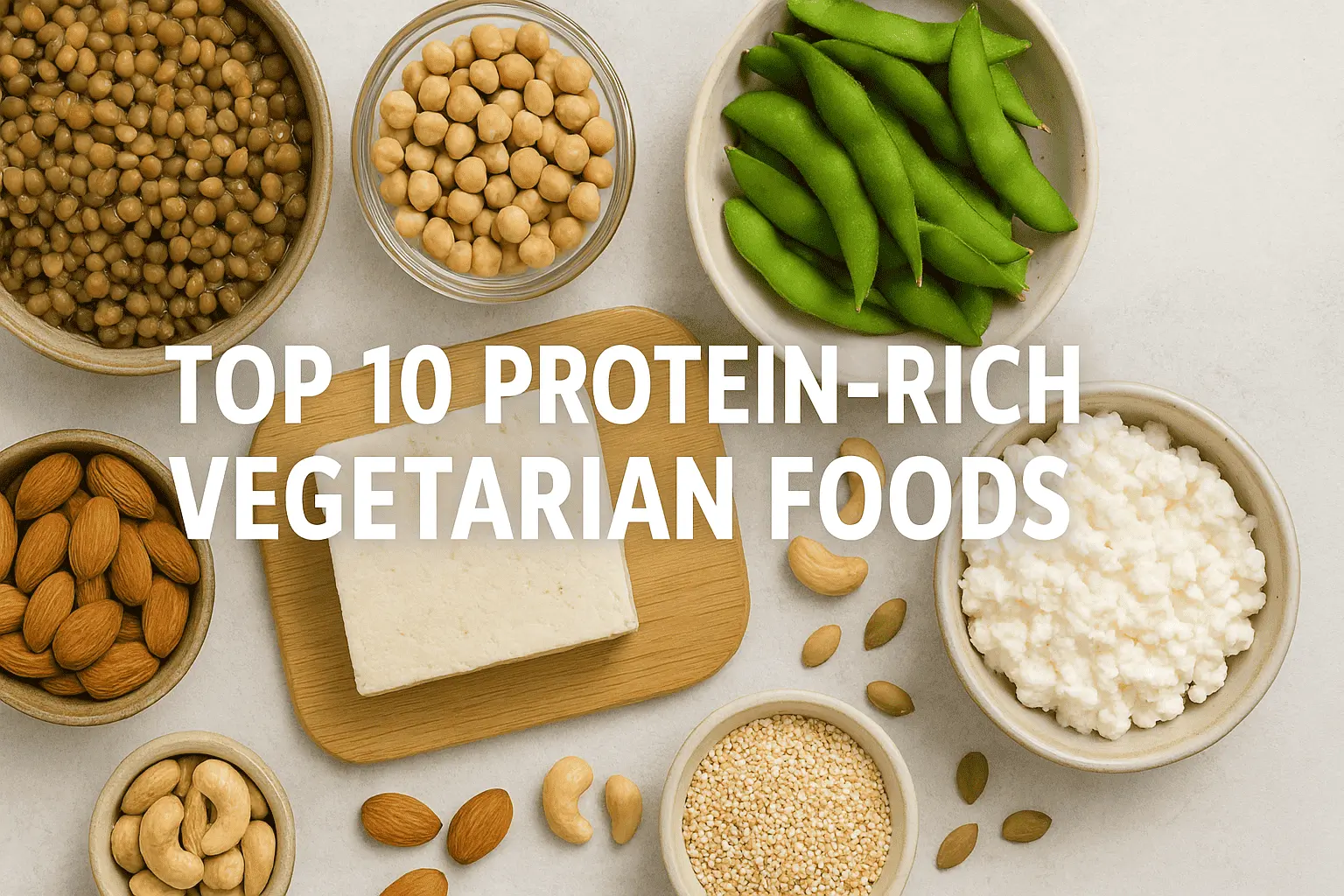
When people think about protein, they often imagine meat, eggs, or fish. However, there are plenty of protein-rich vegetarian foods that can easily meet your daily nutritional needs. Whether you’re vegetarian, vegan, or simply trying to cut down on animal products, plant-based protein can support muscle growth, energy, and overall wellness. In this guide, we’ll explore the top 10 protein-rich vegetarian foods that not only taste amazing but also boost your health naturally.

1. Lentils
Lentils are among the best protein-rich vegetarian foods available worldwide. A single cup of cooked lentils provides around 18 grams of protein, making them an excellent choice for vegetarians. Moreover, they are rich in fiber, iron, and folate, which help in maintaining heart health and improving digestion.
In addition, lentils are extremely versatile. You can use them in soups, curries, salads, and even plant-based patties. As a result, they make a perfect addition to your daily diet if you want a healthy and filling meal.
2. Chickpeas (Garbanzo Beans)
Chickpeas are another great example of protein-rich vegetarian foods that also contain a good amount of complex carbohydrates. A cup of boiled chickpeas offers around 15 grams of protein. Additionally, they are packed with vitamins, minerals, and fiber, which help regulate blood sugar and cholesterol levels.
Furthermore, chickpeas are incredibly flexible. You can roast them for a crunchy snack, blend them into hummus, or mix them into salads. Their nutty flavor adds a pleasant touch to a variety of dishes.

3. Tofu
Tofu, made from soybeans, is a staple among protein-rich vegetarian foods. It provides approximately 10 grams of protein per 100 grams, making it a go-to source of plant-based protein for many vegetarians and vegans. In addition, tofu contains all nine essential amino acids, making it a complete protein source.
Besides, tofu can be used in multiple ways. You can grill it, stir-fry it with vegetables, or even add it to soups. Its ability to absorb flavors makes it a highly adaptable and nutritious food choice.
4. Greek Yogurt
If you consume dairy, Greek yogurt is one of the most delicious protein-rich vegetarian foods to include in your diet. A typical serving of Greek yogurt (200 grams) contains 10–12 grams of protein. It also offers probiotics, calcium, and vitamin B12, which contribute to gut health and strong bones.
Moreover, Greek yogurt can be eaten plain, blended into smoothies, or topped with fruits and nuts for a nutritious snack. Because it’s rich in both flavor and nutrition, it’s an excellent breakfast or post-workout option.
5. Quinoa
Quinoa is a gluten-free grain that stands out among protein-rich vegetarian foods because it’s a complete protein source. One cup of cooked quinoa provides about 8 grams of protein and includes all essential amino acids. Apart from protein, quinoa also offers magnesium, iron, and antioxidants.
Therefore, it’s a wonderful base for salads, bowls, and even breakfast porridge. Since it’s light and fluffy, quinoa pairs beautifully with vegetables and legumes, creating a balanced and satisfying meal.
6. Edamame
Edamame, or young soybeans, are another excellent addition to your list of protein-rich vegetarian foods. A cup of edamame provides about 17 grams of protein, making it one of the highest sources of plant-based protein. It’s also rich in fiber, iron, and calcium, all of which support bone and heart health.
Not only that, edamame can be steamed and eaten as a snack, tossed into salads, or added to rice dishes. Because it’s both tasty and filling, it’s perfect for those who need a quick protein boost.
7. Cottage Cheese (Paneer)
Cottage cheese, also known as paneer in Indian cuisine, is a traditional source of protein-rich vegetarian foods. A 100-gram serving of paneer offers about 18 grams of protein along with calcium and vitamin D. Since it’s low in carbs and high in protein, it’s perfect for weight management and muscle building.
Additionally, paneer can be used in curries, grilled dishes, or even salads. Its mild flavor blends well with spices and vegetables, creating countless healthy meal options.
8. Nuts and Seeds
Nuts and seeds like almonds, chia seeds, flaxseeds, sunflower seeds, and pumpkin seeds are powerful protein-rich vegetarian foods. For example, two tablespoons of chia seeds provide around 5 grams of protein, while a handful of almonds gives you about 6 grams. Moreover, they’re loaded with healthy fats, fiber, and antioxidants.
Since they’re easy to carry and eat, nuts and seeds are perfect for snacks or toppings on yogurt, oatmeal, or smoothies. They not only increase your protein intake but also support brain and heart health.
9. Green Peas
Green peas are often overlooked but are among the simplest protein-rich vegetarian foods you can include in your diet. One cup of cooked green peas offers around 9 grams of protein. They’re also high in fiber, vitamins A, C, and K, making them great for immunity and digestion.
Besides, green peas can be used in stir-fries, soups, or even mashed into spreads. Because of their sweet flavor and soft texture, they complement almost any dish perfectly.

10. Spirulina
Spirulina is a blue-green algae that has earned its place in the superfood category. It’s one of the most nutrient-dense protein-rich vegetarian foods available. A single tablespoon of spirulina powder contains about 4 grams of protein, along with iron, B vitamins, and antioxidants.
Due to its strong flavor, spirulina is often added to smoothies, juices, or energy bars. Just a small amount can significantly boost your daily protein intake and support overall vitality.
How to Include Protein-Rich Vegetarian Foods in Your Diet
Transitioning to a vegetarian or plant-based diet can be simple when you know which top 10 protein-rich vegetarian foods to include. To ensure you’re getting enough protein every day, combine different sources throughout your meals. For instance, you can pair lentils with rice, add tofu to salads, or mix quinoa with vegetables.
Furthermore, try to incorporate a variety of protein sources to get all essential amino acids. Balance is the key — a well-planned vegetarian diet can meet all your nutritional needs without relying on animal products.

Health Benefits of Protein-Rich Vegetarian Foods
Including more protein-rich vegetarian foods in your diet offers numerous health benefits. Here are some of the key advantages:
- Muscle growth and repair: Protein is essential for maintaining and building muscle mass.
- Weight management: High-protein foods keep you full longer, helping you avoid unhealthy snacking.
- Improved metabolism: Protein increases your metabolic rate, making it easier to burn calories.
- Better heart health: Many plant-based protein sources are low in saturated fat and cholesterol.
- Enhanced digestion: Foods like lentils and chickpeas are rich in fiber, which promotes gut health.
Because of these benefits, adding protein-rich vegetarian foods to your diet supports long-term health and energy.
Common Myths About Protein-Rich Vegetarian Foods
There’s a widespread myth that vegetarians don’t get enough protein. However, this is far from the truth. With options like tofu, lentils, quinoa, and nuts, it’s easy to get adequate protein on a vegetarian diet.
Another misconception is that plant-based proteins aren’t “complete.” Although most plant sources lack one or two amino acids, combining different foods throughout the day ensures you receive all essential nutrients.
FAQs About Protein-Rich Vegetarian Foods
1. How much protein do vegetarians need per day?
The average adult needs about 0.8 grams of protein per kilogram of body weight daily. Active individuals or athletes may require slightly more to support muscle recovery and growth.
2. Can vegetarians build muscle without meat?
Yes, absolutely. As long as you include enough top 10protein-rich vegetarian foods such as lentils, tofu, quinoa, and nuts, your body can build and maintain muscle effectively.
3. Are plant proteins as good as animal proteins?
Yes, plant proteins are equally beneficial when consumed in variety. Combining different sources ensures you get all the essential amino acids.
4. Which vegetarian foods are high in protein and low in carbs?
Paneer, tofu, Greek yogurt, and nuts are excellent high-protein, low-carb options for vegetarians.
5. Can kids and older adults rely on vegetarian protein sources?
Yes. top10Protein-rich vegetarian foods like lentils, peas, and dairy products are safe and nutritious for all age groups.
- Fine Motor Activities: Boosting Hand Skills for Lifelong Learning
- Developmental Delay in Babies: Early Signs, Causes, and Effective Support for Healthy Growth
- Pilates Therapy – Complete Professional Details
- What Is Bobath Therapy? What Is Bobath Therapy? A Complete Guide to Neurodevelopmental Treatment What Is Bobath Therapy?
- Best Sensory Processing Therapy for Child: A Complete Parent’s Guide

Conclusion
To sum up, protein-rich vegetarian foods are not only healthy but also delicious and versatile. By including a mix of lentils, chickpeas, tofu, quinoa, and other plant-based proteins in your meals, you can easily meet your body’s nutritional needs. Moreover, these foods support energy, strength, and overall well-being without relying on meat.
So, whether you’re looking to stay fit, build muscle, or simply eat healthier, these top 10 protein-rich vegetarian foods are your best companions on the journey to better health.