
Writer@healingwithramIntroduction
When parents think about a newborn’s growth, one of the first concerns is proper nutrition. Every stage of a baby’s life depends on nutrients, and protein plays a major role in building muscles, repairing tissues, and supporting immunity. Although many parents rely on animal-based protein sources, there are numerous protein-rich vegetarian foods for weight in newborns that offer safe, natural, and highly nutritious benefits.
In this guide, we will explore the top 10 vegetarian protein foods that help improve weight gain in babies while keeping their health balanced. We will also answer common questions and provide practical tips for parents who want to give their newborns the best start in life.
- Fine Motor Activities: Boosting Hand Skills for Lifelong Learning
- Developmental Delay in Babies: Early Signs, Causes, and Effective Support for Healthy Growth
- Pilates Therapy – Complete Professional Details
- What Is Bobath Therapy? What Is Bobath Therapy? A Complete Guide to Neurodevelopmental Treatment What Is Bobath Therapy?
- Best Sensory Processing Therapy for Child: A Complete Parent’s Guide
Why Protein Matters for Newborns
Protein is one of the most essential nutrients for newborns because it supports growth at a cellular level. From building strong bones to strengthening immunity, protein lays the foundation for lifelong health. Additionally, protein ensures that a baby gains healthy weight steadily, which is a key marker of proper development. Therefore, parents must consider adding vegetarian protein foods when looking for natural and digestible nutrition sources.
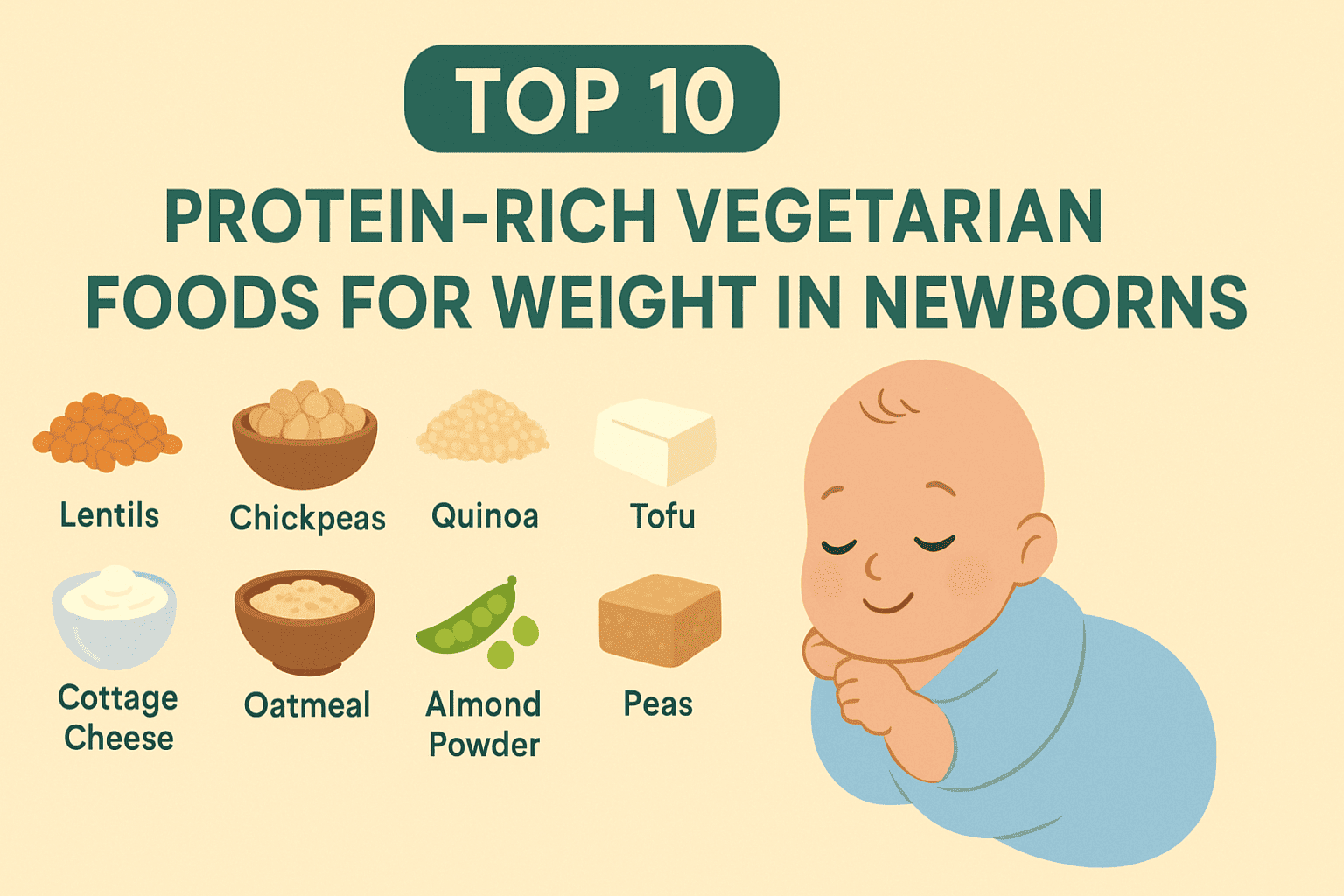
Top 10 Protein-Rich Vegetarian Foods for Weight in Newborns
1. Lentils for Newborn Weight Gain
Lentils are one of the best protein-rich vegetarian foods for weight in newborns. They are loaded with protein, iron, and fiber, which help support healthy digestion and balanced growth. Moreover, lentils are easy to prepare as soups or purees, making them gentle for a baby’s stomach.
2. Chickpeas as a Plant Protein Source
Chickpeas are another wonderful food option. They contain protein, folate, and essential minerals that help in weight gain for newborns. Furthermore, chickpeas can be turned into soft purees or powders that blend well with baby food, ensuring easy consumption.
3. Quinoa as a Complete Vegetarian Protein
Quinoa is a superfood that provides all nine essential amino acids. Unlike many grains, quinoa is a complete protein, making it a reliable option for parents who want to include protein-rich vegetarian foods in their baby’s diet. Its soft texture and mild taste make it suitable for preparing baby-friendly dishes.
4. Greek Yogurt as a Protein-Packed Option
Greek yogurt, although dairy-based, is vegetarian-friendly and offers a high amount of protein per serving. In addition, it supports digestion with probiotics and promotes stronger bones with calcium. Parents can mix yogurt with fruit purees to enhance flavor and nutritional value.
5. Oats for Gentle Nutrition
Oats are highly digestible and rich in protein and fiber. They also keep a baby full for longer and help in steady weight gain. Because oats are versatile, they can be used as porridge, combined with milk, or mixed with pureed fruits.
6. Tofu as a Soft Protein Food
Tofu is made from soybeans and is one of the easiest protein-rich vegetarian foods for weight in newborns. It is packed with protein, calcium, and iron, all of which are important for a baby’s development. Moreover, its soft texture makes it easy to mash and blend into baby meals.
7. Cottage Cheese for Growth Support
Cottage cheese is mild in taste and extremely rich in protein. It provides a healthy mix of protein and fat, which are both necessary for weight gain in newborns. Because it is soft and creamy, it can be introduced in small amounts safely.
8. Almond Powder as a Protein Supplement
Although whole nuts are not safe for babies due to choking risks, almond powder can be added to baby foods. Almonds are rich in protein, healthy fats, and vitamin E, which promote brain development and weight gain. Parents can sprinkle almond powder into porridge or smoothies for extra nutrition.
9. Green Peas as a Baby-Friendly Food
Green peas are another excellent vegetarian protein source. They are soft, naturally sweet, and full of protein, vitamins, and minerals. Furthermore, peas can be mashed or blended into soups, making them ideal for babies who are starting solid foods.
10. Brown Rice as a Protein-Rich Grain
Brown rice is a wholesome grain that provides protein, fiber, and energy. It supports healthy digestion and gives newborns the strength to grow. By preparing it as a soft porridge, parents can easily include it in a baby’s diet for gradual weight gain.

Benefits of Protein-Rich Vegetarian Foods for Newborns
The above-listed foods not only support weight gain but also:
- Improve immunity against infections
- Enhance brain development
- Strengthen muscles and bones
- Support digestion with natural fiber
- Provide energy for active growth
With consistent use, parents can see healthy and steady improvements in their newborn’s weight and overall well-being.
Tips for Parents Introducing Protein Foods
- Always consult a pediatrician before introducing new foods.
- Begin with small amounts and observe for allergies.
- Ensure foods are well-cooked and mashed to avoid choking.
- Balance protein with fruits, vegetables, and whole grains.
- Avoid adding sugar, salt, or spices to baby foods.
FAQs About Protein-Rich Vegetarian Foods for Weight in Newborns
1. When can newborns start eating protein-rich vegetarian foods?
Most newborns rely on breast milk or formula for the first six months. After six months, parents can gradually introduce vegetarian protein foods in small amounts, alongside continued breastfeeding.
2. Are plant-based proteins enough for healthy growth?
Yes, plant-based proteins are excellent for growth when combined with other nutrients. Foods like lentils, quinoa, tofu, and peas provide complete nutrition needed for steady weight gain in newborns.
3. How do I know if my baby is getting enough protein?
Signs of proper protein intake include steady weight gain, active behavior, and strong immunity. A pediatrician can also guide parents with growth charts and nutritional assessments.
4. Which protein-rich vegetarian food is easiest to digest?
Lentils, oats, and peas are among the easiest foods for babies to digest. They are gentle on the stomach and provide balanced nutrition without causing discomfort.
5. Can I mix vegetarian protein sources together?
Yes, combining foods like oats with almond powder or quinoa with peas can enhance nutrition and flavor. Mixing proteins also ensures that babies get a variety of amino acids.
Conclusion
Nutrition is the foundation of a baby’s healthy growth. While animal-based foods are often considered protein-rich, vegetarian options are equally powerful and safer for many families. From lentils and chickpeas to tofu and quinoa, there are many protein-rich vegetarian foods for weight in newborns that support steady growth, immunity, and overall development.
By following safe preparation methods and consulting healthcare experts, parents can ensure their newborns receive the right protein for a healthy and happy life.
All Medical content is based on verified sources such as ICMR, AIIMS, and MoHFW India