Introduction
The human brain is one of the most remarkable organs in the body. For many years, scientists believed that brain damage was permanent and that recovery after neurological injury was limited. However, modern neuroscience has completely transformed this understanding. Today, researchers know that the brain has an incredible ability to adapt, reorganize, and heal through a process known as neuroplasticity.
Neuroplasticity and brain recovery have become central topics in neurological rehabilitation, offering hope to individuals affected by stroke, traumatic brain injury, cerebral palsy, Parkinson’s disease, spinal cord injury, and other neurological conditions. Moreover, ongoing research continues to demonstrate that targeted therapy, repetitive practice, and enriched environments can significantly improve functional outcomes.
Therefore, understanding neuroplasticity is essential for patients, caregivers, therapists, and healthcare professionals who aim to maximize recovery potential.
What Is Neuroplasticity?
Neuroplasticity refers to the brain’s ability to change its structure and function in response to experiences, learning, injury, or environmental demands. In other words, the brain can create new neural pathways, strengthen existing connections, and reorganize functions when necessary.
Furthermore, neuroplasticity occurs throughout life. Although younger brains typically show greater adaptability, adults also retain a significant capacity for neurological change.
As a result, rehabilitation programs increasingly focus on activities that stimulate neuroplasticity and brain recovery.
Types of Neuroplasticity
1. Structural Neuroplasticity
Structural neuroplasticity involves physical changes in the brain. Specifically, neurons can form new connections and reorganize neural networks following repeated stimulation and learning.
Consequently, patients who engage in consistent therapy may develop stronger neural pathways that support improved movement, cognition, and daily functioning.
2. Functional Neuroplasticity
Functional neuroplasticity refers to the brain’s ability to transfer functions from damaged areas to healthy regions.
For example, after a stroke affects a specific brain area, neighboring regions may gradually take over some lost functions. Therefore, rehabilitation exercises play a crucial role in facilitating this adaptation.
The Relationship Between Neuroplasticity and Brain Recovery
Neuroplasticity and brain recovery are closely connected because neurological healing depends largely on the brain’s capacity to reorganize itself.
When injury occurs, damaged neural pathways may become less efficient. However, through repeated practice and therapeutic interventions, alternative pathways can develop. Consequently, patients often regain skills that were initially lost.
Moreover, research suggests that recovery is not solely dependent on the extent of damage. Instead, recovery outcomes are significantly influenced by rehabilitation intensity, timing, and patient engagement.
Therefore, neuroplasticity serves as the foundation of modern neurological rehabilitation.
Scientific Research Supporting Neuroplasticity
Numerous studies have highlighted the role of neuroplasticity in neurological recovery.
Researchers have demonstrated that repetitive task-specific training can promote cortical reorganization. Additionally, neuroimaging studies reveal measurable changes in brain activity following rehabilitation interventions.
Furthermore, evidence suggests that intensive therapy programs can increase neural connectivity, improve motor function, and enhance cognitive performance.
As a result, neuroplasticity-based rehabilitation has become a cornerstone of evidence-based neurological care worldwide.
Neuroplasticity After Stroke
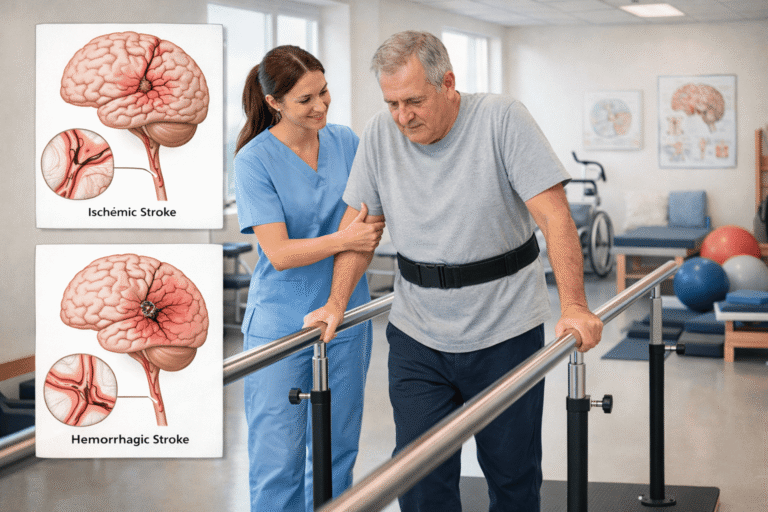
Stroke remains one of the leading causes of disability globally. Fortunately, neuroplasticity offers a pathway toward recovery.
Following a stroke, surviving brain cells begin adapting to compensate for damaged regions. However, this process requires stimulation through rehabilitation.
Therefore, physiotherapy, occupational therapy, and speech therapy are essential components of recovery.
Moreover, research indicates that repetitive movement training, balance exercises, and functional activities can significantly improve outcomes. Consequently, many stroke survivors regain independence through structured rehabilitation programs.
Neuroplasticity in Cerebral Palsy
Cerebral palsy is a neurological condition that affects movement and posture. Although the initial brain injury does not progress, the brain continues developing throughout childhood.
Because of this ongoing development, neuroplasticity and brain recovery remain highly relevant in pediatric rehabilitation.
Furthermore, interventions such as task-specific training, constraint-induced movement therapy, gait training, and play-based therapy can enhance motor function.
As a result, children often achieve meaningful improvements in mobility, coordination, and participation in daily activities.
Neuroplasticity and Traumatic Brain Injury
Traumatic brain injury can affect memory, attention, balance, movement, and emotional regulation.
However, neuroplasticity provides an opportunity for recovery through targeted rehabilitation.
For instance, cognitive exercises, balance training, coordination activities, and functional practice encourage the formation of new neural connections.
Additionally, research suggests that consistent therapy can promote adaptive brain reorganization and functional improvement.
Therefore, individualized rehabilitation remains critical for optimizing recovery after brain injury.
The Role of Repetition in Neuroplasticity
One of the most important principles of neuroplasticity is repetition.
The phrase “neurons that fire together wire together” explains how repeated activation strengthens neural pathways.
Consequently, repeated practice of functional tasks reinforces desired movement patterns and cognitive skills.
For example, repeated reaching activities can improve arm function after stroke. Similarly, repeated walking practice can enhance gait performance in neurological patients.
Therefore, rehabilitation programs often emphasize high-intensity, repetitive training.
Importance of Task-Specific Training
Task-specific training involves practicing meaningful activities that directly relate to daily life.
Rather than performing isolated exercises alone, patients practice real-world tasks such as walking, reaching, grasping, standing, or dressing.
As a result, the brain learns more efficiently because training closely matches functional goals.
Furthermore, research consistently supports task-specific training as an effective strategy for promoting neuroplasticity and brain recovery.
Exercise and Brain Recovery
Physical activity has a profound impact on brain health.
Regular exercise increases blood flow to the brain, supports neuronal health, and stimulates the release of growth factors that facilitate neural adaptation.
Moreover, aerobic exercise has been associated with improved cognition, memory, and motor performance.
Consequently, incorporating exercise into rehabilitation programs can enhance overall recovery outcomes.
The Role of Early Intervention
Early intervention is another critical factor in neuroplasticity and brain recovery.
Following neurological injury, the brain enters a period of heightened adaptability. During this phase, rehabilitation may produce significant improvements.
Therefore, initiating therapy as early as medically appropriate can maximize recovery potential.
Additionally, early intervention helps prevent secondary complications such as muscle weakness, contractures, and learned non-use.
As a result, patients often experience better long-term outcomes.
Technology and Neuroplasticity
Technological advancements continue to transform neurological rehabilitation.
For example, robotic therapy systems provide intensive and repetitive practice opportunities. Similarly, virtual reality environments increase patient engagement while promoting motor learning.
Furthermore, brain-computer interfaces and non-invasive brain stimulation techniques are emerging as promising tools for enhancing neuroplasticity.
Consequently, technology is expanding rehabilitation possibilities and improving access to evidence-based interventions.
Lifestyle Factors That Support Neuroplasticity
Several lifestyle factors can positively influence neuroplasticity and brain recovery.
Quality Sleep
Sleep plays a vital role in memory consolidation and neural repair. Therefore, adequate sleep supports learning and recovery processes.
Proper Nutrition
A balanced diet provides essential nutrients that support brain function and neuronal health.
Stress Management
Chronic stress can negatively affect brain performance. Consequently, relaxation techniques, mindfulness, and emotional support are beneficial.
Continuous Learning
Learning new skills challenges the brain and promotes the development of new neural connections.
As a result, lifelong learning contributes to overall brain health.
Challenges in Brain Recovery
Although neuroplasticity offers tremendous potential, recovery is often complex.
Several factors influence outcomes, including injury severity, age, overall health, motivation, therapy intensity, and environmental support.
Furthermore, recovery timelines vary among individuals.
Therefore, realistic expectations and consistent rehabilitation efforts are essential.
Despite these challenges, significant improvements remain possible even months or years after neurological injury.
Future Directions in Neuroplasticity Research
Researchers continue exploring innovative approaches to enhance neuroplasticity and brain recovery.
Current areas of investigation include advanced neuroimaging techniques, stem cell therapies, brain stimulation technologies, artificial intelligence-assisted rehabilitation, and personalized treatment protocols.
Moreover, scientists are working to better understand how individual differences affect recovery potential.
Consequently, future rehabilitation strategies may become increasingly precise and effective.
Conclusion
Neuroplasticity and brain recovery represent one of the most exciting developments in modern neuroscience. Rather than viewing neurological injury as a permanent limitation, researchers now recognize the brain’s remarkable ability to adapt and reorganize.
Furthermore, scientific evidence consistently demonstrates that targeted rehabilitation, repetitive practice, task-specific training, exercise, and early intervention can facilitate meaningful recovery.
Therefore, patients, families, and healthcare professionals should embrace neuroplasticity as a powerful foundation for rehabilitation. Although recovery may require time, dedication, and persistence, the brain’s capacity for change provides hope and opportunity for improved function and quality of life.
Ultimately, continued research into neuroplasticity and brain recovery will further enhance rehabilitation outcomes and help countless individuals achieve their highest potential.